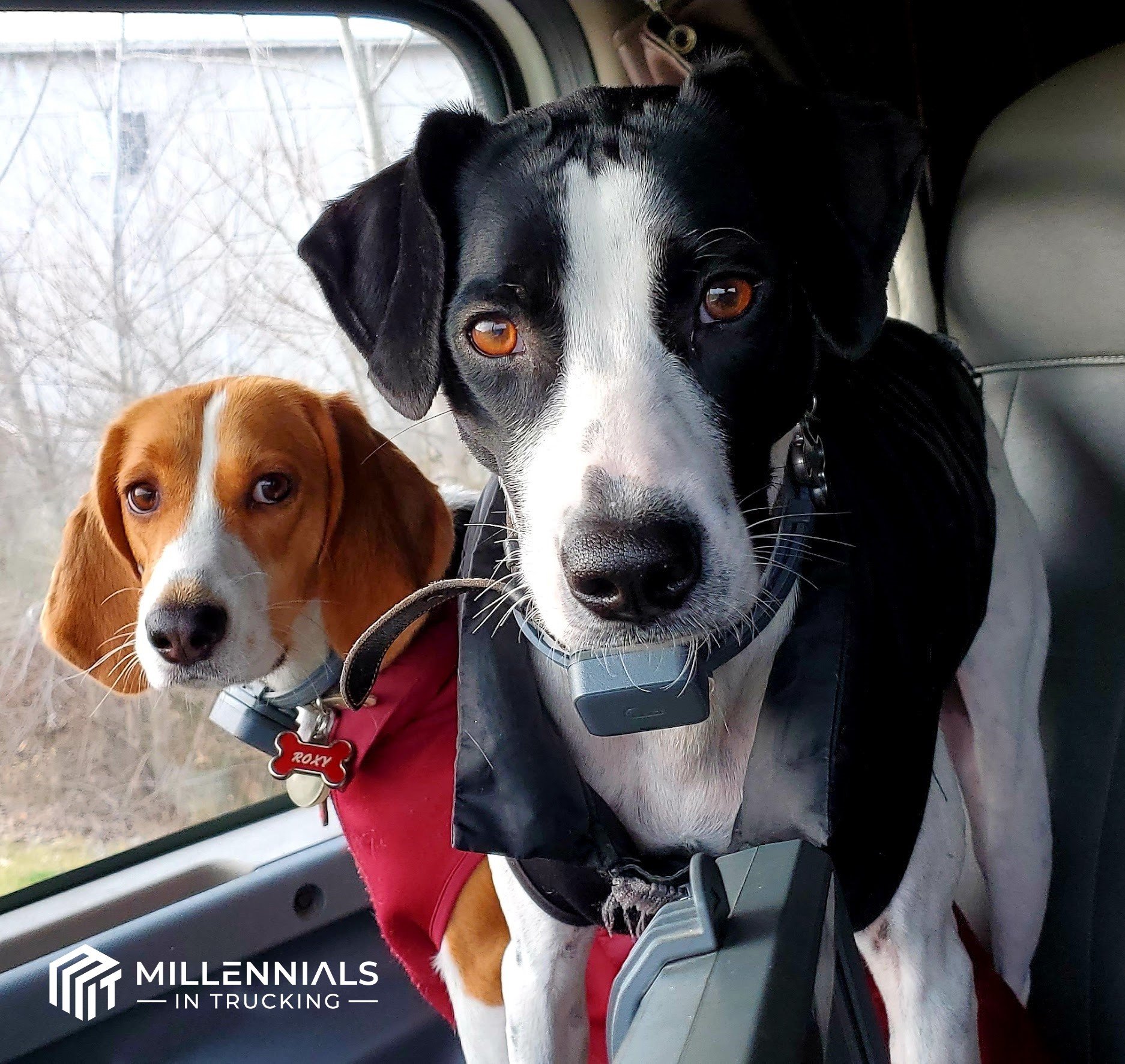
Keeping your Trucker Dogs Safe, Happy, and Healthy

We personally know that the company of a trucker dog is completely unmatched! There is nothing like having your fur-ball to cuddle up with you when you go to bed, or keep you company while you’re sitting waiting for your next load. They help us get out of the truck and get fresh air in times where we likely wouldn’t bother stepping out of the sleeper, or let alone get out of bed. Then the bonus of added security when you’re laying down, and your dog alerts you to a noise outside that is too close and/or unfamiliar, is just priceless. We also can't forget to mention that adorable wiggle butt dance that commences as soon as they see you walking back to the truck.
Setting them up in a rig can be challenging at first, however. Most of us dog owners don’t mind sharing our beds or using a large portion of our storage for their food and floor space for their bowls, but that doesn’t even begin to cover the lengthy list that includes their health, cleanliness, or toys. So we’d like to highlight some of our favorite products and accessories for keeping our pups buttoned up out here over the road.
If you have rowdy dogs who love their toys as much as ours do, it’s essential to keep the dog toys in one place, where you can easily dump them, and move them around when and where you need. Especially for balls that can get lose and jump into the cab, causing a safety issue. To keep you from pulling your hair out after they have a zoomie session and leave their toys with scattered toy guts everywhere, we found these to be the most useful all around. These cotton bins are safe for them to reach in and out of and are flexible enough to get shoved into small areas when you need it out of the way.
We used to use this plastic squeeze bottle, though we have since moved onto this larger KONG stainless-steel version for full time use. Both have proven reliable over the years because they don’t have any mechanical features to fail and the unused water can easily be replaced back into the bottle. They also feature great portability for long walks, dog parks, and hiking or camping trips.
We use both manual and electric tools – manual clippers to cut back the length of their nails and then we finish off with the electric nail grinder to smooth out any sharp edges that can scratch our doors and dash, or damage the leather seats. We found this set from YABIFE that came with both the manual and electric version for a very reasonable price, and keep them both stored in the door for regular easy access.
The Vittles Vault storage bin has been our go-to solution since 2016 – so much so, that we have a set we keep at home in our garage, and another set for our truck. We utilize the 40lb version so we can easily buy food in bulk, minimizing down time and maximizing price savings. This bin features a silicone seal that really assures the food container is airtight, allowing us to keep it stored in the toolbox and safe from the constant changing elements outside.
There’s nothing worse than when you have to let the dogs out in the rain and mud while you’re on a run, leading to the time-consuming paw clean up. They come back trotting all over the cab or into the sleeper on your clean rugs, or even worse, jump in your sheets! We use this ridiculously handy silicone cleaning tool to get the bulk of the dirt and grime out of their toes, and then finish with this rinse-less cleaner and soft brush combo that we can easily dry off or let air day.
Our favorite, and our dogs favorite toys have come to be Chuck It brand everything. This Chuck It Frisbee is durable to heavy chewing, easy to throw, easy to clean, and so easy to store we have one in each door on the truck. You can say the same thing for the indestructible Chuck It ball, that comes in all sizes!
Cuddling up with your furbaby, and all of a sudden have a pit in your stomach because you didn’t notice your dog ate a nugget of poo on your walk? We found not only one, but two answers! Since incorporating Vetradent and Proden Plaqueoff into their bowls, both our girls have had scent free breath. Not to mention, both are backed by data and VOHC approved. We combine both the water additive that helps with bad breath and the powder sprinkled on their food to help remove the plaque along their gum-line and it has proved incredibly effective all while giving the added benefit of fresher breath. The combination of these two has turned out to be the secret sauce!
GPS Tracker + Activity Monitoring
We have been rescuing dogs since we were both kids, so we only deal with rescues, and since you don’t know what you’re going to get with a new rescue, or how long it will be till they respond to training, we incorporated a 4G GPS tracker on our youngest rescue a few years back. The Whistle 4G tracker uses AT&T service towers, and allows you to see their location on a satellite map. It’s incredibly affordable for all of the services offered, and we found the service even more useful to monitor their activity time and make sure they were hitting their daily exercise goals. As a small back up and in between charging their Whistles, we threw Tile Trackers onto their collars for good measure.
We found out about the Seresto collar when we first started trucking and had a lengthy discussion with our vet on how to keep them healthy while traveling throughout the states. We have had a total of 7 animals in the last 9 years using this collar and have never had to worry about fleas or ticks. We have been dedicated consumers of theirs since day one and have recommended this flea and tick collar to everyone we know.
Let us know how these products work for you and share some of your favorite products with us!
You can catch more of our girls in the truck on our TikTok!
Run Hard - Dream Big,
Finding Your Fleet (Part II)
A recent post shared by a fellow expediter made some great points when it came to finding a small fleet to work for. We’ve decided to highlight her post and add to it, from a former driver and now owner’s, perspective.
“If you want to make $1500 each per driver, you have to accomplish that yourself. You are the maker of your paycheck. You have to learn how to make that happen and when you run percentage, trying for a set amount per week doesn’t always work. Sometimes it’s how the month ends.”
Running as a self-dispatching contractor like we do here, you create your own destiny because YOU are your dispatcher AND your engineer. You have to decide what load it worth what, what your minimums are, which areas are best, where to relocate, etc. Some teams will shoot for a weekly goal, or will run only a certain region of the states – it doesn’t matter how you get to your financial goals; all of these methods can work. You genuinely must figure out YOUR strengths and how you like to run as a team – what works for you both. We found that we can lose an entire week and still hit $30k+ in a month, but that comes with years of experience and being way beyond the “FOMO” phase. We run day to day, don’t plan too far out, and we love it that way because found that we hit our goals with minimal stress.
“As a team joining expediting, even if you have been team driving for 25 years - if you haven’t run percentage and expediting, it’s a different way of doing things. We ran 17 years in tractor trailer, by the mile, 20,000+ mile a month. Coming here was an adjustment. You don’t run constantly like when you’re running per mile as a team. It’s a ‘work smarter, not harder’ deal. Sure, you can run yourself to death running constantly in a big box company as a super team, making the same or less, (taking the quickest shower possible, eating only sandwiches or junk etc.) but that gets old, and that’s why most of you came here. Dispatching yourself is a game, it’s calculating trying to decide which load to take, and which load will put you where the ‘money load’ will be if it pops on the board. It’s aggravating and rewarding. You have to be open to learn new things and not be stuck in your ways.”
She’s right – coming from tractor trailer was a major adjustment. It was night and day to go from mileage-based pay to percentage. Switching that mentality took time but was so essential. If not, you will run your per mile rate down and work harder for less. You will no longer have to run 5,000+ miles a week as team to make a good paycheck, and instead you can work 3 days on 2 loads and make the same that you would on 2 cross country runs. You’re no longer booked out for the week, now you’re booking a load for today or tomorrow, never knowing where you’re going next after delivery, or how much you’ll make tomorrow. This can make transitioning tractor trailer teams very antsy, because they’re looking for miles, not at the end goal for the month. We like to say to give it at least 6 months before you give up on expediting, especially if you’re coming from tractor trailer.
“When you start out here, your company is not going to tell you how to pick loads, how to bid, or anything. Just that there is a load board, how to log in, and hit accept. If you try and do it on your own, without guidance, it will take a lot of trial and error. You will get frustrated. So, if the fleet you go to has mentors, or you meet a team that offers to help, take them up on it. Let them show you the ropes. There are rules that your company will follow to decide who wins a load, and you need to understand them. You need to understand when a mentor or fleet owners tells you certain areas are dead zones, that they are telling you to avoid headaches. There will be a time for you to go out west, but the first week you are out on the road is not one. Just remember, we are always learning new things, if you think you know everything already then you are one of the ones that has a lot to learn still.”
Coming out here with a know-it-all mentality will quickly humble you. We have been at this almost 8 years and still find some of our own ‘guidelines’ changing, because the landscape of our company is constantly changing, and we must change with it. That’s okay because the seasons don’t change – trucking overall has its busy and dead seasons, all of which we are already aware of and therefor plan for. However, it can be very hard for new teams without guidance to come out here and try to make it work. Not that it can’t be done however, you will learn what loads are worth their rates, and which aren’t. You will start to form a minimum to run into certain cities, due to the cost of tolls and/or relocating after delivery. You will learn which customers don’t care about detention, and will take their time to load you, putting your early morning delivery at risk, and therefore minimizing your chances for a next day load, so maybe you’ll charge double for that run. You will learn the seasons and you will start to be able to predict when the leaves are about to fall before they have even changed color. Be patient when you’re learning the landscape, absorb all that you can, and learn what works for YOU. We advise all of our new drivers to “Forget what you think you know, and don’t apply rules from a different side of the trucking industry to the world of expediting because you will only set yourself up for failure.”
“Don’t believe everything you hear. If someone tells you they make ‘this’ every week or month, ask for proof. If they don’t want to show you numbers, then it’s probably inflated. If an owner tells you to not talk to other drivers, then someone has something to hide. But also, not all drivers tell the truth, whether it’s to keep you from taking “their” loads, or to seem better than you. Take a lot of what you hear, especially on social media platforms, with a grain of salt. Some of us are honest and just want to help, while others don’t feel like they are anything unless they are making someone else feels small. You are not stupid for asking questions no matter how big or small, and if they tell you how stupid you are for not knowing they are just being bullies.”
This is a constant and sad reality of the world we live in – people lacking integrity and character. Expediting is a small industry; most of us know each other, and word spreads quickly, even the false rumors. Toxic fleet owners and lackluster dealerships are all well-known and constantly confirm the rumors. You can’t hide out here, and that’s the beauty of the double-edged sword that is expediting. This is why it’s important to get multiple opinions or outlooks in the industry, to weed out the nonsense. If someone gets intimated by you asking questions, walk away and move on, but don’t let it discourage you from continuing to ask questions. People who have been out here for a while think they know everything and become short sighted, forgetting that they were new at one point too. They are plenty of us out here willing to help and provide real guidance or give you our own opinions without being intimated. There is room for all of us to succeed and thrive in this industry.
What to Expect at a Truck Stop
Welcome to your second home.
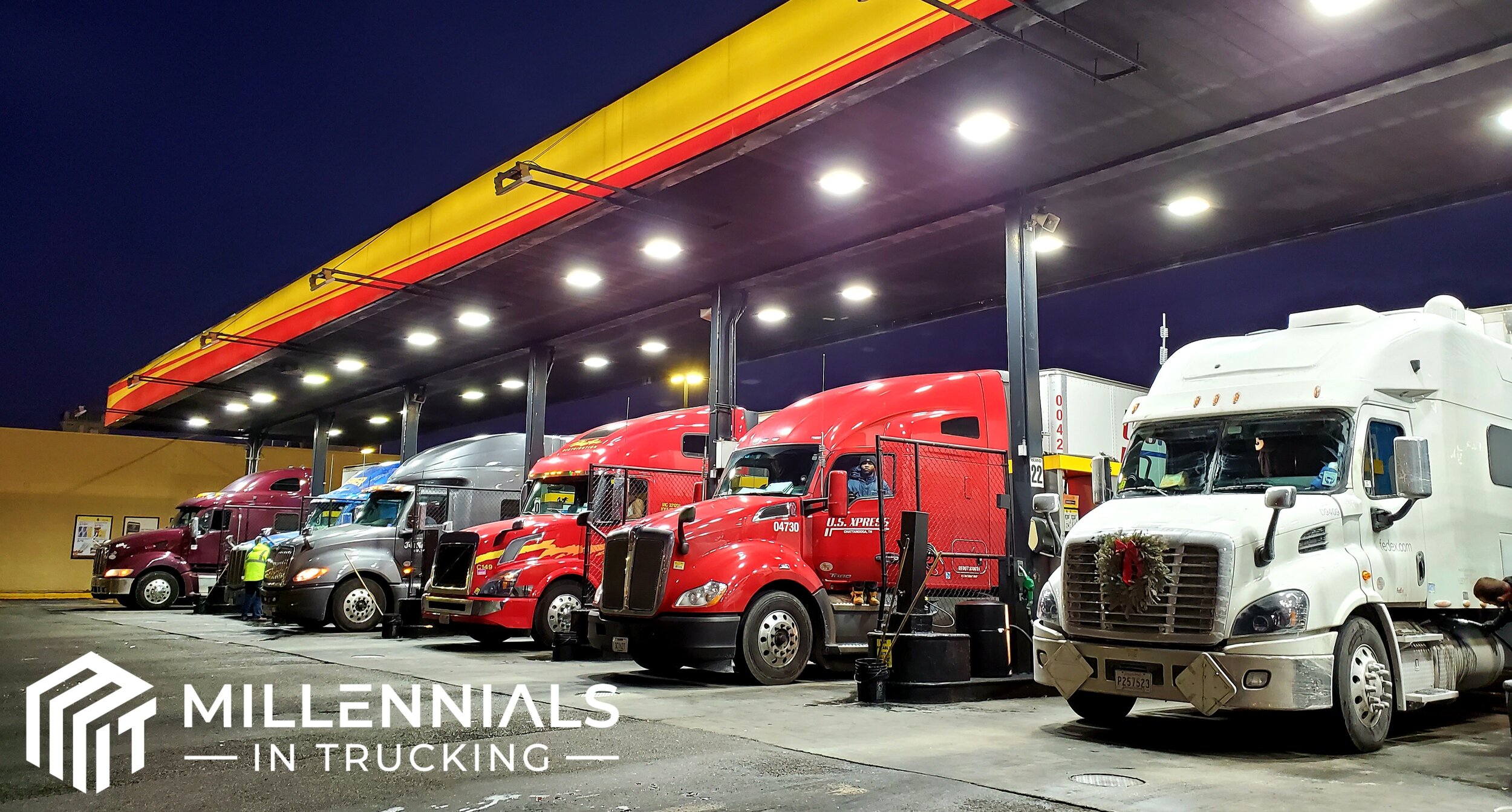
You’ll be blown away by some of the amenities offered by truck stops. They feature mini movie theaters, museums, salons, barber shops, shoe shine stations, chrome shops, cell phone stores, and even a bowling alley. Trucking locations have attempted to make life easier with these few simple additions to fuel and food.
Does it work? That depends on who you ask.
You’ll find just about everything you need to run smoothly at any general truck stop; from shower supplies to laundry supplies, dog food and toys, truck parts, tech accessories and seasonal clothing. We don’t recommend doing your everyday shopping at these trucking locations because the convenience of it will only hurt your pockets. Prices at truck stops can be as much as triple the price at your local supermarket, but in a pinch it is a great convenience that you will experience at some point.
A favorite amongst drivers are the truck stops diners; mostly 24 hours with buffet specials available everyday of the week, offering private seating just for truckers. The food is belt busting, but it’s hot and just what a trucker needs to feel at home. Most locations will also have at least one fast food restaurant in addition to the diner because food is always in demand when it comes to truckers.
One of the most necessary features of a truck stop is the diesel shop and parts section. You’ll be able to find what you need for general maintenance to keep you running. You can expect to find your basic selection of tools, oils and lubricants, and simple parts like windshield wipers. Majority of the diesel shops are 24 hours and offer full service centers.
In addition to the basic amenities, some locations feature chrome shops, cb shops, salons, and mini “movie theaters.” How often you will utilize these options are dependent on your lifestyle while over the road, but it is still necessary to aid in the comfort and ease of access to drivers who are away from home for extended periods of time.
Cleanliness can be questionable depending on where you stop but most corporate run truck stops have someone outside cleaning the parking lot and fuel areas in addition to the store itself. You will quickly find which locations meet your standards, as you will frequent them more than you realize.
As more locations open across the nation, showers are being updated and made to look more modern in turn pushing prices to average $15 per use. They offer a full private bathroom, with bolt locks for added security (a few of us have been surprised by shower attendants accidentally). Aside from that, most showers are equipped with coat hooks, 3 speed fans, and a hairdryer. Corporate named truck stops provide fresh towels, bar soap, and liquid body wash.
Truck stop showers are private rooms that are cleaned after every use. They generally contain a personal sink, fan, towels, bar of soap, liquid soap dispensers, and a hairdryer.
So do truck stops make living as a truck driver easier? That’s up to you to decide. The food can be mediocre, general products are good to have in a pinch but are overpriced, and most truck stops typically lack healthy activities. So though a majority of their features are outdated, trust that they are working hard to catch up to the new generational shift. You might find that some locations simply provide fuel, showers, and a lit parking lot.
Welcome to your second home.
Trucker Lingo
Get a jump start and learn the language of the trucker nation! We’ve compiled a list of CB terms, or “trucker slang” to make it easy.
Here we've compiled a list of “trucking terms" that you will hear often once you get out over the road. You'll hear these words thrown around at truck stops, over the airways of your CB, and from your dispatcher. Some you might even hear referenced at CDL school! Get a head start and learn the language of the trucker nation.
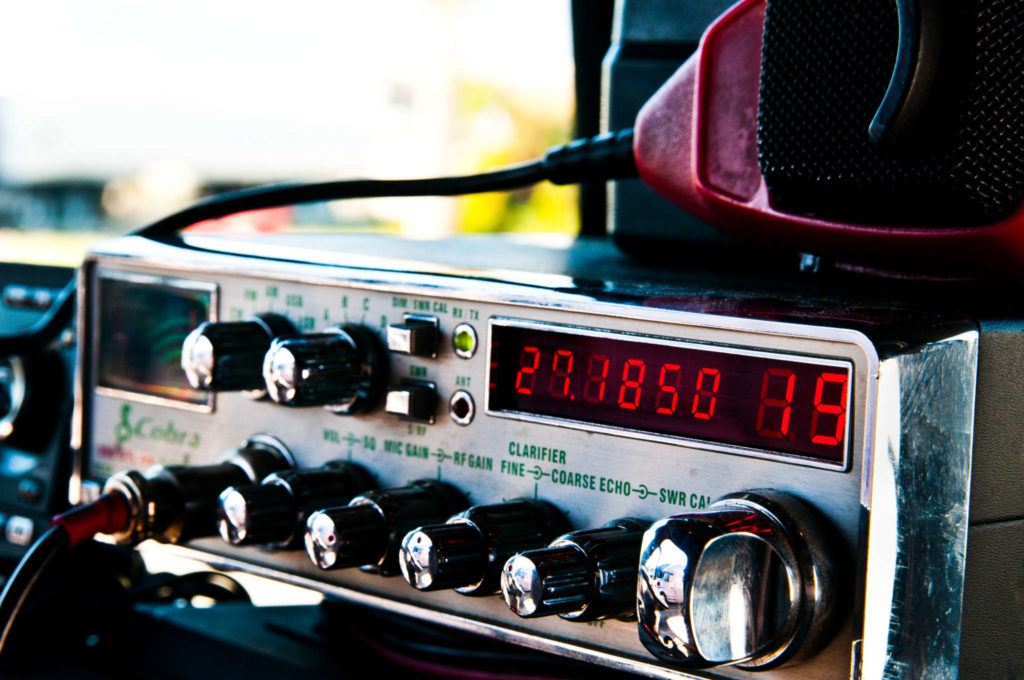
Cobra Classic C.B. Radio
Alley Dock - 90 degree maneuver to dock or park
Asphalt Cowboy - truck driver
Bear Trap - speed trap
Bill of Lading - shipment documents to identify full shipment information, usually given by shipper - freight contract/receipt (pick up address, delivery address, laden weight, freight contents, tracking information, hazmat identification, etc.)
Blindside - navigating your equipment (blindly) without being able to see the side you’re backing towards
Bobtail - Tractor without a trailer attached
Freightliner Classic XL (Bobtail)
Bull-Hauler “Livestock” - Drivers hauling livestock (cows, pigs, chickens, etc.)
Catwalk “Deck plate” - metal plate between your tractor and drive tires; used as a safe place to stand and walk along to connect airlines and inspect trailer
C.B. - Citizens Band Radio - two way radio, communication equipment used by truckers and law enforcement
C.B. Handle - Nickname used for communication over the CB radio
CDL - Commercial Drivers License
Chicken Coop - Weigh Station
Chicken Lights - amber lights alongside a tractor and/or trailer, sometimes referring "extra or added lighting”
Chicken Truck - truck covered in lots of lights, chrome, and accessories (show truck)
Convoy - large group of trucks, usually intentionally following one another
Photo from the movie Convoy (1978)
County Mounty - sheriff
Covered Wagon - flatbed trailer with mounted cover around trailer
CPM/RPM - “Cents Per Mile / Rate Per Mile” - how much a load compensates based on a break down of mileage
CSA - Compliance, Safety, Accountability - point system used to determine safety history and indentify high risk trucking companies
CVSA - Commercial Vehicle Safety Alliance
D.C. - Dristribution Center
Deadhead/Empty Move - Empty and/or unpaid miles
DEF - Diesel Exhaust Fluid (NEVER to be mistaken for Diesel)
Detention - compensated waiting time for delays with load/unload
DOT - Department of Transportation
Doubles - Tractor pulling a set of trailers
Double Nickel - 55 mph speed limit
Dragon Fly - ”Drag N’ Fly” - Dragging your trailer up the hill or mountain, and flying down the other side with payload assisted speed
Drivers Lounge - waiting area for drivers, typically containing seating, restrooms, coffee bar, microwave, TVs, etc.
Drop and Hook - Dropping a loaded trailer to turn around and connect to an empty trailer, meant to get you to your next destination
Drop Yard - parking area used to pick up and/or drop empty or loaded trailers
Dry Van - trailer without refrigeration or temperature control
E-Logs (ELD) - Electronic recorder of all hours related to the driver/s - "Electronic Logging Device”
Omnitracs ELD
EOBR - Electronic On Board Recorder - computer used to log truck data, trip information, gps satellite location, and movement
Evil Knievel - motorcycle cop
Expediter - any class 8 vehicle or cargo vans being used for expedite shipments (point a to point b, straight through deliveries)
ETA - Estimated Time of Arrival
Fifth-Wheel - coupling system to attach tractor to the trailers king pin with a locking jaw mechanism
Floating Gears - shifting gears without the need of using the clutch (revving your engine to a certain rpm allows you to change gears smoothly without clutching)
FMCSA - Federal Motor Carrier Safety Administration
Forced Dispatch - not having free will over the loads you run with possible repercussions if you decide against certain loads, most common for company drivers
Four Wheeler - cars and other vehicles
Fox in the Hen House - Unmarked cop car
Freight Shaker - Freightliner
Fuel Lane - diesel lanes
Full Grown Bear - State Trooper
Gator “Alligator” - piece of tire debri left behind from tire blowouts, commonly seen on interstate shoulders, tread similar looking to a gators back
G.O.A.L. - Get Out and Look - term used to remind drivers to check their surroundings when backing, commonly seen on side view mirrors
Hammer Down - Go fast, “pedal to the metal”
Hammer Lane - Left lane and/or passing lanes
Hazmat - “Hazardous Materials" - controlled and/or classified freight that has license requirements and falls under stricter rules to haul
Home 20 - drivers home town
Hometime - time off and/or vacation time
Hotshot - different from expediting, hotshotting typically includes medium duty vehicles (Class 3, 4, and 5) such as pick up trucks hauling trailers and cargo vans, used for time critical shipments
H.O.S. - Hours of Service - Logging hours
Jackknife - truck turning in on itself, folding like a pocket knife
Jake Brakes - Engine brakes; Engine Retarder
Keep the rubber side down - “safe travels” - “be safe on your trip” (maintaining contact with the tires and the road, keeping your unit upright)
Knocking on your doors - coming up behind you or following too closely
Kojak with a Kodak - cop using a speed gun
Landing Gear - adjustable legs used to hold trailer upright independent from the tractor
Largecar - any class 8 vehicle, usually show trucks (lots of chrome and accessories)
Live load/unload - driver supplies empty trailer and remains at shipper untill freight it fully loaded, and waits to get unloaded at deliveries
Local Driver “Local” - drivers that run within a short distance of home (inner city, tri-county, tri-state areas) known for being home every night or multiple nights per week
Lot Lizard - Prostitute (primarily found at truck stops - walking throughout the parking lot knocking on trucks)
Lowboy - “Step deck” - Flatbed trailer with a low deck used for oversized freight
LTL - Less Than Truckload - combination of small shipments for multiple delivery destinations
Lumper - person at pick up or delivery whose responsible for loading or offloading your freight, usually for a fee
Marker Interrupt - switch that will momentarily turn off the marker lights on the truck and trailer, used primarily to communicate something to other truck drivers (safe to get over, thank you for letting me over, hazard up ahead, etc.)
Meat Wagon - Ambulance
Motion Lotion - diesel
On your rubber - behind you
OTR “Over-The-Road” - long haul truck driver (cross country)
Parking Lot - Car hauler
Party Row - back row of truck stop parking lots, used in past time for lot lizard hang outs
Pay-Load - shipping weight / total weight of freight
Personal Conveyance - time allowed for personal use of which doesn't go against your clock
Placards - diamond shaped signage used to identify and communicate hazmat cargo classifications
POC - Point of Contact
POD - Point of Delivery
Predispatch “Preplan" - Future scheduled load
Prepass - device used to bypass weigh stations
Pre/Post-Trip - inspection of truck required by law, to the responsibility of the driver before and after operating equipment
Qualcomm - brand of satellite units used for dispatch communications, load information, elogs, and EOBR services
Radio Check - used to ask others over the cb if your communication is coming through clearly
Reefer - refrigerated unit or trailer
Rubbernecker/s - people who slow down to look at an accident on the road, known for causing back ups
Safe Haven - secure parking facility or area used for active high security shipments
Salt Shaker - service vehicle used to treat roadways for snow and ice, aid in snow/ice removal, by dumping salt or brine on pavement
Skateboard - Flatbed Trailer
Sleeper (Sleeper Berth) - area behind cab of tractor considered a truckers living and resting space
Slow Crawl - bumper to bumper traffic, stop and go, leading to a “slow crawl”
Smokey (Bear) - Law Enforcement Officer
Steering Wheel Holder - Rookie or uncaring driver, only knows “how to hold the wheel”
Straight Back - Reversing in a straight line
Straight Truck - tractor with cargo area permanently attached on one chassis
Suicide Jockey - Driver hauling explosives
Super Trucker - irresponsible driver not taken seriously (i.e., driving fast, wearing gloves, like to think they “break the rules, etc.)
Tractor Trailer - Tractor with a trailer attached; combination vehicle
Truck Stop - Gas/Diesel Station with added amenities for truckers including but not limited to, fast food and full service restaurants, showers, diesel mechanic shops, and provided parked for large trucks
Turtle Race - two trucks trying to pass one another, usually with speed governors
Two Wheeler - motorcycle
Veteran Driver - “Seasoned Driver” - trucker with millions of miles driven
Weigh Station - state regulated check point for legal weight limits, equipment compliance, and driver licensing and logs; found at state entry points among interstates and U.S. Highways
Wiggle Wagon - tractor pulling more than a single trailer (Refer to “Doubles/Triples”)
Yard Dog - “Yard Jockey” driver usually in a single seated cab, relocating trailers throughout the hub or warehouse yard (around the warehouse, moving trailers to and from docks, or to and from distribution centers)
Yard Stick - Mile marker
10-4 - “I hear you” or understood
18 Wheeler - tractor trailer combination (stating the amount of wheels when in active connection)
Any suggestions?
Leave us a comment of your favorite trucking terms!
This list will continue to grow with driver feedback.