
What it Takes to Become an Owner-Operator
On a conference call with our tax accountant, he called us out personally and said “Guys, you can’t be a jack of all trades… leave the details to the professionals…” as he tried to sell us on their in house accounting products. Unfortunately, we didn’t have the privilege of the extra revenue to be able to afford such a luxury - to hand off our responsibilities as a single truck operation - that would cut a good chunk of our already small profit margins.

Overhead. Overhead. Overhead. "Location, location, location.”
Plan for the absolute worst to happen. Even when trucks are new and under warranty - if your truck is down for an extended period of time, your liabilities are still due, and there is so much more than truck payments when you become an owner. If you fall behind in less than a few months or are relying on advances to fuel up your truck, you didn’t save accordingly. Before buying your first truck, make sure to have 6 months or more of your overhead costs. Figure your expenses; truck payment, insurance payments, satellite and equipment payments, credit card payments, and any additional fees you might be accruing every month, then multiply that by 6 - and add a couple grand on top of each month to give you wiggle room for those additional expenses, like general maintenance, for a good estimate of what your nest egg should be.
Truck buying - “Don’t sell yourself short - literally.”
Whether you’re building or buying your first truck, make sure your equipment gives you options, and can sign onto multiple different carriers in case you needed to abandon ship at your current company. This is only a safety net - being able to move your equipment when things go wrong - a back up plan that you hopefully won’t have to use but is there if you need it. Then when you do want to invest in specialized equipment in a smaller market, make sure you’ve personally done your time in said segment to gain the most insight to where you’re investing. Don’t go run out and buy a truck for a specific lane that you’ve never run or are “being promised”, or when you’re new in a segment of an industry you’ve never been apart of.
Networking.
“It’s not what you know, it’s who you know.” is a sentiment we have been sharing with anyone and everyone we’ve ever met that ask us for tips to find success within trucking. Whether you’re someone who is talkative or more reserved, you’ll have to learn to be both when the opportunity is presented to you. Learn to shut your mouth and open your ears to listen to people who’ve been in it longer than you, take value in learning from their mistakes, and ask as many questions as you can. Connections are a great thing to have, and when issues present themselves (and they will) you’ll need to know where to go to find those answers. Google and Reddit will only be able to help you with so much. So, build up your network and make friends in the right areas, which means all areas.
Ask Around.
Talk to fellow owners that have insight into the truck you’re looking to buy or build, as well as the equipment attached to it; APUs, liftgates, reefers, etc. If you’re unsure of companies, talk to their drivers, ask about miles, bonuses, backhauls, etc. Looking to build or buy a truck? Then get quotes at multiple dealerships, and ask other owners where they purchased and if they have any recommendations on dealerships. Don’t just jump on the first opportunity that presents itself.
Listen to your gut.
“If something seems too good to be true, than it probably is.” The trucking industry has a ridiculous amount of scams that prey on uniformed and/or new drivers looking to move up and branch out as an owner. If a company or dealership rubs you the wrong way, look elsewhere and move on. At the end of the day, our gut has saved us from making deals with bad seeds, and kept us from getting taken advantage of in every aspect of the business.
Take your time.
The statistics for small businesses are scary and disheartening to say the least. In their first year, 20% of small businesses are doomed to fail. By year 5, less than 50% still remain. The most common causes that lead to entrepreneurs and small businesses failing is lack of planning and cash flow issues. If you want to equip yourself to avoid ending up on the wrong side of these stats, take your time, learn and absorb everything you can, and always have a back up plan.
- Run Hard, Dream Big

Are you truck show ready?
Today kicks off the first day of the beloved Mid-America Truck Show!
Today kicks off the first day of the beloved Mid-America Truck Show! There are ample benefits to attending a truck show whether you’re a driver, aspiring owner operator, single truck owner, fleet owner, or just a fan of big rigs! From the networking, the deals, the freebies, or the polished chrome, there are festivities for everyone and anyone who attends!
Make sure you dress to impress… – YOUR FEET. The Mid-America Truck show is seemingly never ending and will have you covering at least a few miles of stomping ground in a single day. MATS boasts a whopping 1,000,000 square feet, over 800 vendors, and 40 different events over their 3-day schedule.
Have you been holding off for a specific headset to go on sale or a piece of chrome that you want a guaranteed fit on? Most vendors will have some serious deals going on that they’ll call a “truck show special” – sometimes the pricing is the same, and they’re selling their stuff off to unsuspecting customers, but if you’ve done your research, then you’ll know when you’ve struck a deal!
This also includes vendors for more complex trucking equipment that would need to be installed at a shop. You can meet with the vendor at the show and negotiate a price for parts and labor with their approved third-party providers. We've been able to save hundreds of dollars with this one tip on things like truck body accessories and automatic tire chains.
Say you’re having an issues with your tools, parts, chrome, or trucking tech, you can also meet with the supplier in person and most companies are prepared to handle any warranty or claim issues at the show. If they can’t handle it for you there in person, you can expect to leave with either an open claim or direct contact for your issue.
Of course, you can’t forget the freebies and the big rigs! Walking down a single isle at the show will leave you with more free stuff than you can hold with both hands. Most booths will have giveaways that can include tools, cleaning supplies, vendor samples, and branded goodies to give to your friends and family. Trucks will cover the showroom floor, but the annual truck show contest will be at Lot N in front of the West and South Wing.
If you do plan to attend, make sure to stop by and say hi to some of our partners in our small world of expediting!
Fedex Custom Critical - 67057 (West Wing)
Panther 32405 - (South Wing)
Landstar - 16148 (North Wing)
Show Information:
The Mid-America Trucking Show is from Thursday, March 20th – Saturday, March 23rd and is held at the Kentucky Expo Center (KEC) in Louisville, KY. Parking is available on the KEC lot for rates ranging from $12-$80. They also offer free offsite overnight truck parking across from the KEC, with free shuttles to and from the show during show hours. The paid truck show parking lot is at 937 Phillips Lane, Louisville, KY 40209. The free parking lot is across from Gate 1 at 1032 Phillips Lane, KY 40209.
To register for the show, click here.
For a breakdown of the events, click here.
For an interactive map of the show room floor and list of exhibitors, click here.
We're planning to attend the Mid-America Truck Show this weekend, so if you’re out there and would like to meet us, give us a shout!
Feel free to send us any shots of yourself, or anything you think should be highlighted, along with your thoughts on this years show, and we’ll feature you on our next article!
Run Hard - Dream Big,

Finding Your Fleet (Part I)
A recent post shared by a fellow expediter made some great points when it came to finding a small fleet to work for. We’ve decided to highlight her post and add to it, from a former driver and now owner’s, perspective.
A recent post shared by a fellow expediter made some great points when it came to finding a small fleet to work for. We’ve decided to highlight her post and add to it from a former driver and now owner’s, perspective. We're going to work through her post, point by point.

“When looking for a driving job - look at the different fleets (there are more than 3 or 4) and see what they each offer. Don’t just look at the one that has shower trucks… Look at how reliable they are; Do they pay every week? Do they give bonuses? Do they allow pets? Are there pet deposits or escrows? Do they have target amounts per month, per mile, etc.? Do they want you to only get maintenance at certain locations or can you get it done immediately?”
Choosing your fleet because they have eye catching ads or shower trucks might not make them the jewel out here – there are a lot of things to consider. Inquiring about pay and bonuses is important because newer fleets might not have bonuses whereas older fleets might have all of their equipment paid off and therefore might be able to afford larger pay percentages and/or bonuses. So not every fleet offers bonuses, just like not every fleet has an escrow or security deposits just because you have a pet. Some fleets require escrows without pets. There are also fleets who run equipment with very strict rules; using very specific shops because the equipment lacks service centers. Now, sometimes this isn’t intentional – dealers and/or fleets are constantly testing new equipment and the newer the equipment, the smaller the service center coverage you may have. Other times, it could be a smaller fleet who prefer to use small shops because they don’t have fleet accounts with the larger service centers to be able to get price breaks. See where your values are best met.
“When looking at the fleets you find that interest you; talk on the phone with a list of your questions you want to ask. Ask to talk to some of their drivers. Ask to see their contract. Write down what they tell you.”
Before we joined expediting, we spoke to the owner multiple times – sometimes just to clarify everything we asked, and we asked a LOT of questions. Writing down your questions so you don’t forget anything once you get on the phone with an owner can be a huge help, especially when you’re a team. Majority of fleets have a contract in place – asking to see it before qualifying with a carrier and moving too far forward can save you both a lot of time. Now, speaking to current drivers is great, but speaking to former drivers is even more important. Verify what you were told with current drivers, see why the former drivers left the fleet, and take both with a grain of salt, because at the end of the day - no fleet, nor driver, is perfect. Lastly, ask the owner to text or email a summary of your discussion with what their fleet offers, and follow your gut.
“Ad’s for drivers - if a fleet advertises a set amount you will earn a week, I would only believe that if it’s a dedicated run. Just because an ad says ‘shower trucks available’ doesn’t mean you will get one. Some fleets offer shower units as something you work up to. Non force dispatch is exactly that, but that doesn’t mean you can take a month off and not expect the owner to call and ask you whats up? If a fleet has 5% of their fleet doing YouTube, Tik Tok, etc. saying ‘Come see us and join our fleet’ it doesn’t mean that just because they have a presence on social media, they are the best. It means that is what they do to get the word out that they have openings for teams.”
Some job listings can be very misleading, especially in our industry. Units fitted with bathrooms are some of the most expensive upgrades our sleepers can get, so they are usually given to top earning teams, or the teams with the most seniority. Now if a job listing is guaranteeing you a certain pay weekly, they should either have a minimum weekly guarantee or you will be running a dedicated route. So, she’s right. Outside of those two circumstances, there is no guarantee of pay out here, because you are in control of your fate. How much money you make will depend on how you work, the loads you do or don’t take, the qualifications you have, and/or the kind of equipment the fleet operates. Not all fleets have refrigerated units or newer units that can even qualify to run controlled freight. Not all fleets will mentor you or give you the resources and knowledge to help make you successful, and these basic needs can make or break you in expedite. Every fleet advertises differently so again, don’t look for the most expensive or most eye-catching ads - stick with your gut.
“Every trucking company has their good and bad qualities... you talk to any one of their drivers, you will hear ‘they are great’ and ‘they are horrible’. It’s like that with any job, in any industry. It’s the individuals experience; how they act, how they treat others, and how well they do their job - that is the difference between “we love this company” or “we hate it.”
When speaking to drivers and/or owners, take everything with a grain of salt. Your experience can be very different. The driver you speak with might have trashed a truck but they only told you the owner deducted a cleaning fee out of their last settlement. On the flip side, the owner might tell you they offer bonuses, but when you speak to one of their drivers, you might find that the owner will find any reason not to pay it out, or they have to chase after it with multiple phone calls and emails. You will likely find a driver that has been disqualified from driving for a specific expedite company, but they won’t tell you that they were reported countless times for not wearing their uniforms at customers, or have multiple OOS violations. Sometimes, we can work and live with integrity and don’t receive it back. However, don’t let the bad owners ruin your outlook on the industry and if you find yourself in a rotten egg of a fleet, start asking around and find a fleet that will value you, and show you integrity still exists.
Don't forget that you can reach out to us with any questions, or if there's something we've covered that you would like us to expand on, let us know. You can even stay anonymous.
Run Hard - Dream Big,
- M.I.T.

Mental Health and the Reality of Driver Burnout
“…just like the industry we inherited, we also inherited the culture.”
Mental health has been much less stigmatized within the millennial generation. In fact, you can frequently overhear conversations between us regarding mental health; going as far as sharing tips and insight from recent therapy sessions or bonding over triggers and sharing our stories of ways we learned how to better process those past traumas. We aren’t ashamed to discuss these issues, because we inherited just as much of the culture as we did the industry.
Now we’re trying to fix it, and the best way to start is by talking about it.

Truck drivers suffer the highest rates of mental and physical exhaustion. The truck driver turnover rate in 2019 was at 91%, estimating that a mere 9 of every 100 new drivers would stay in the industry. We have a long list of issues in the trucking industry, but one of the root causes for this high turnover rate was driver dissatisfaction. So if you really love trucking, see yourself in it for the long haul, and want to lessen the load of your burnout before it drives you to hang up the keys - you have to start with you as the driver.
Driver burnout is real, and we’ve all felt it at one time or another. You finish out the week, just to end up laying in bed all weekend - only getting up for snacks or to pick up a mobile food order at best. Finding the motivation to do your laundry, tidy up your truck, or taking the dogs out, all of a sudden feels like a burden. These days will happen - allow yourself to have a bad day, it's okay. Be lazy and don’t feel bad for it - you need the rest.
We know that trucking is a balancing act because home time isn’t always timely, or even certain at some points. So setting aside time for therapy, your hobbies, or some self-care can seem like a daunting task with more reason not to do it. We’re here to tell you however, you can do these things over the road, and we hope we’ve convinced you as to why you should.
We are more than thankful for today’s technology, as it opened the door to telehealth so now there are multiple sources for therapy on the go. A few we can personally recommend are DrOnDemand and Teladoc. Both of these platforms allow you to have both video and phone calls with licensed psychologists, or psychiatrists if you need medicinal treatment in addition to talk therapy.
Start to implement gratitude and refocus your energy on self-care. Treat yourself to a manicure and/or pedicure at a salon, or really splurge and go for a full body massage at the spa. Get out of the truck, save money, avoid people, connect with nature and go camping or find a nice walking path in a local park, an all around win. Then on days when you’re feeling unmotivated, or just down overall - remind yourself of all of the things you’re grateful for. You can even start a gratitude journal, and on those bad days when you feel like you can’t find a reason to be thankful, you can reread what you’ve written on days before, and it can come as a small reminder that the moment is temporary.
Reconnect with your hobbies by making them mobile and taking them with you on the road. Do you have a love for exercise? Kettle bells, dumbbells, and resistance bands are some of the easiest pieces of workout equipment to travel with. Love photography? Grab your DSLR, GoPro, or your drone, and find the best area near you with the subject you love to photograph most. Or maybe you’re more a gamer? Draw the curtains and get lost in your favorite video games! Maybe you’re a foodie or grill master? Find yourself a portable grill or slow cooker to fit your needs and treat yourself to a home cooked meal in your down-time. Make the road your home, because that's where you're spending most of your time.

It’s easy to lose yourself over the road, but we want you to stay en route. Before you log yourself into the sleeper and head back to the bunk, we want to remind you to show yourself compassion. Allow yourself that time to decompress, to breath, to accept your mistakes, to grow, to heal, and to better enjoy the roads trucking can take you on.
We live life with a “day by day” or “one mile at a time'“ mentality, and we challenge you to as well.
There are resources readily available for you when you’re ready to take the journey to improve your mental health - you can start with the National Alliance on Mental Health, the Substance Abuse and Mental Health Services Administration, or the Trevor Project, specialized in helping our LGBT community.
If you or someone you know, is struggling or in crisis, help is available and you are not alone.
Call or text 988.
As a reminder, please feel free to write into us with any questions or topics you’d like us to cover - you can even do so anonymously.
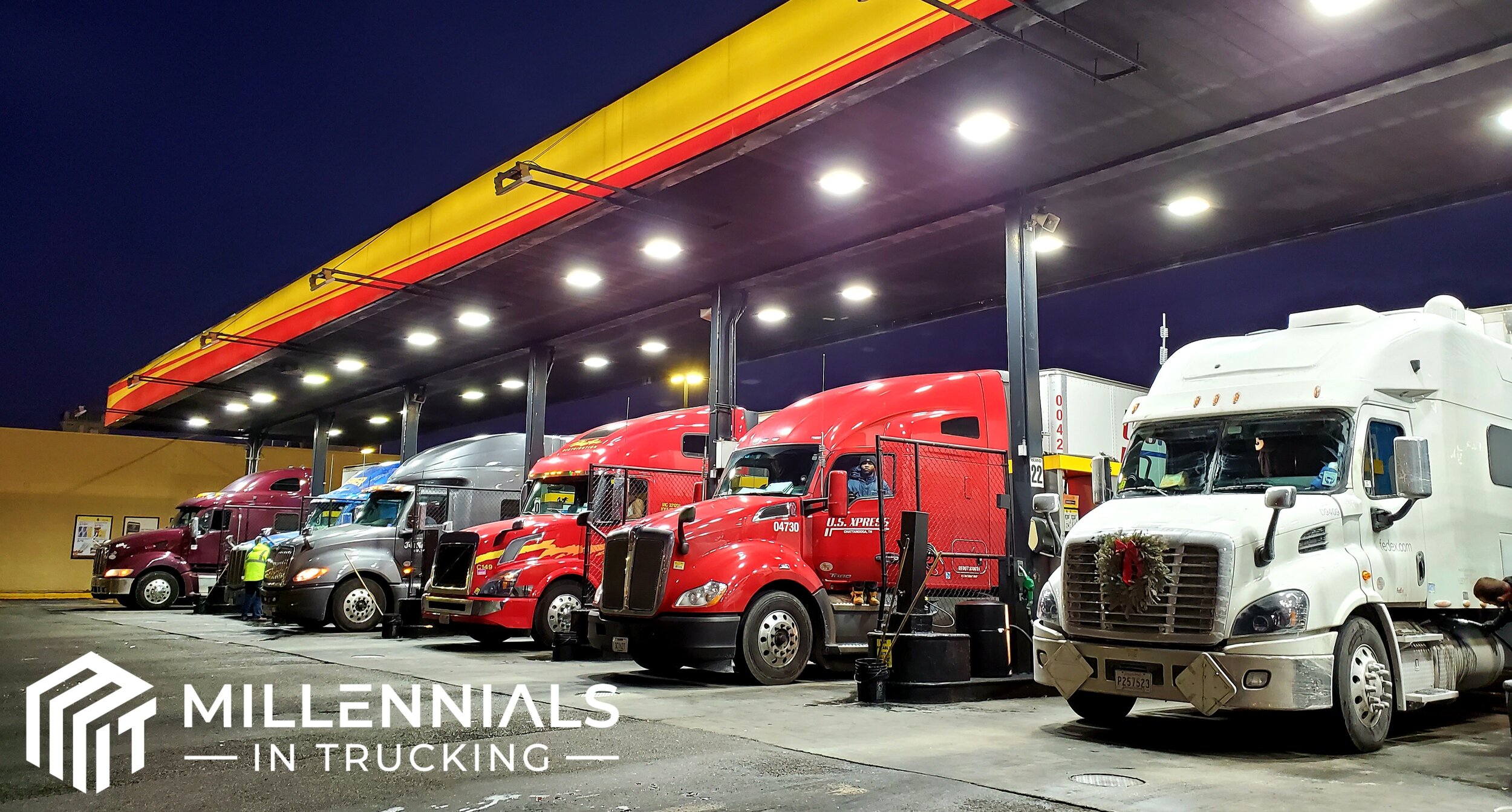
What to Expect at a Truck Stop
Welcome to your second home.
You’ll be blown away by some of the amenities offered by truck stops. They feature mini movie theaters, museums, salons, barber shops, shoe shine stations, chrome shops, cell phone stores, and even a bowling alley. Trucking locations have attempted to make life easier with these few simple additions to fuel and food.
Does it work? That depends on who you ask.

You’ll find just about everything you need to run smoothly at any general truck stop; from shower supplies to laundry supplies, dog food and toys, truck parts, tech accessories and seasonal clothing. We don’t recommend doing your everyday shopping at these trucking locations because the convenience of it will only hurt your pockets. Prices at truck stops can be as much as triple the price at your local supermarket, but in a pinch it is a great convenience that you will experience at some point.
A favorite amongst drivers are the truck stops diners; mostly 24 hours with buffet specials available everyday of the week, offering private seating just for truckers. The food is belt busting, but it’s hot and just what a trucker needs to feel at home. Most locations will also have at least one fast food restaurant in addition to the diner because food is always in demand when it comes to truckers.
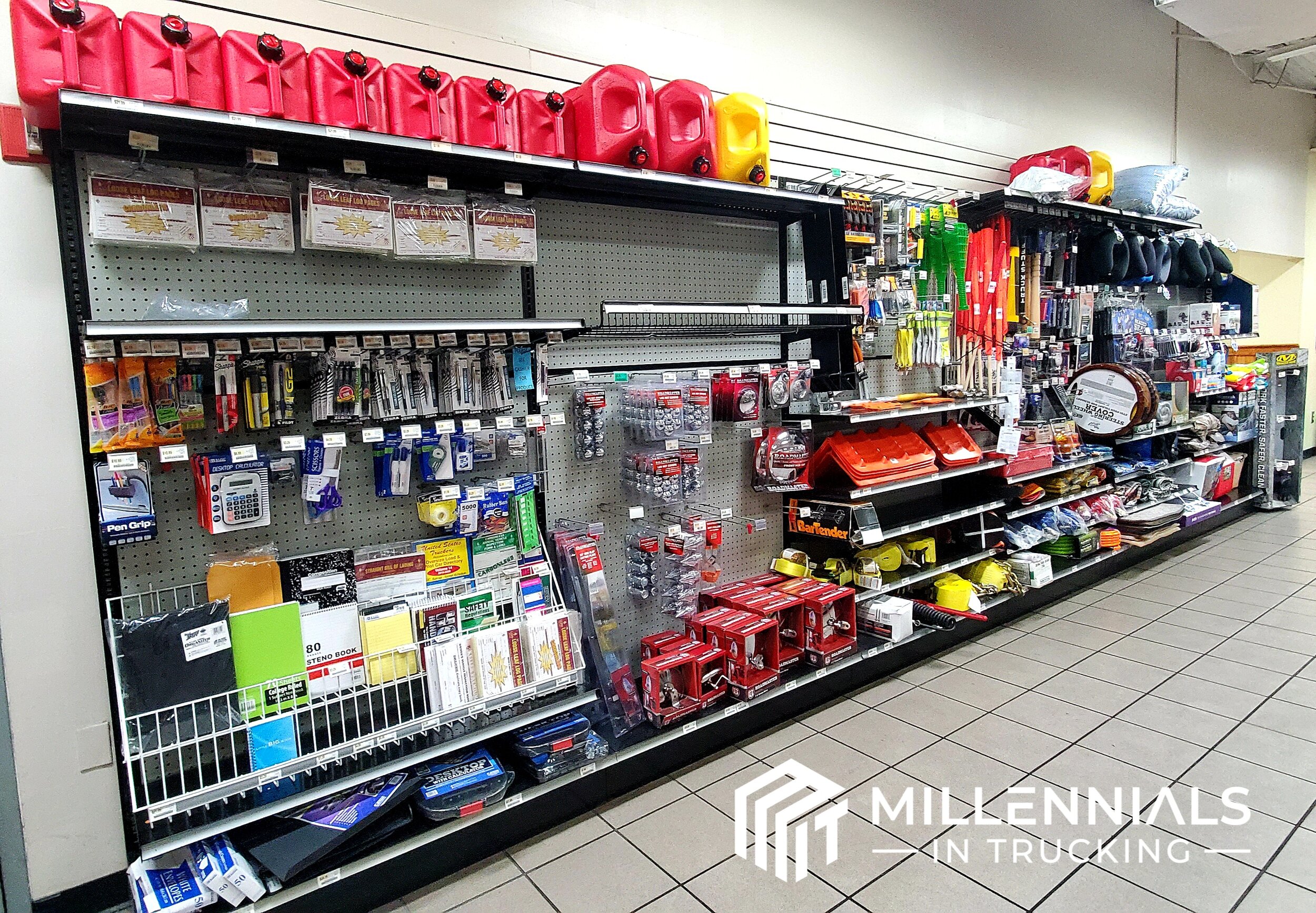
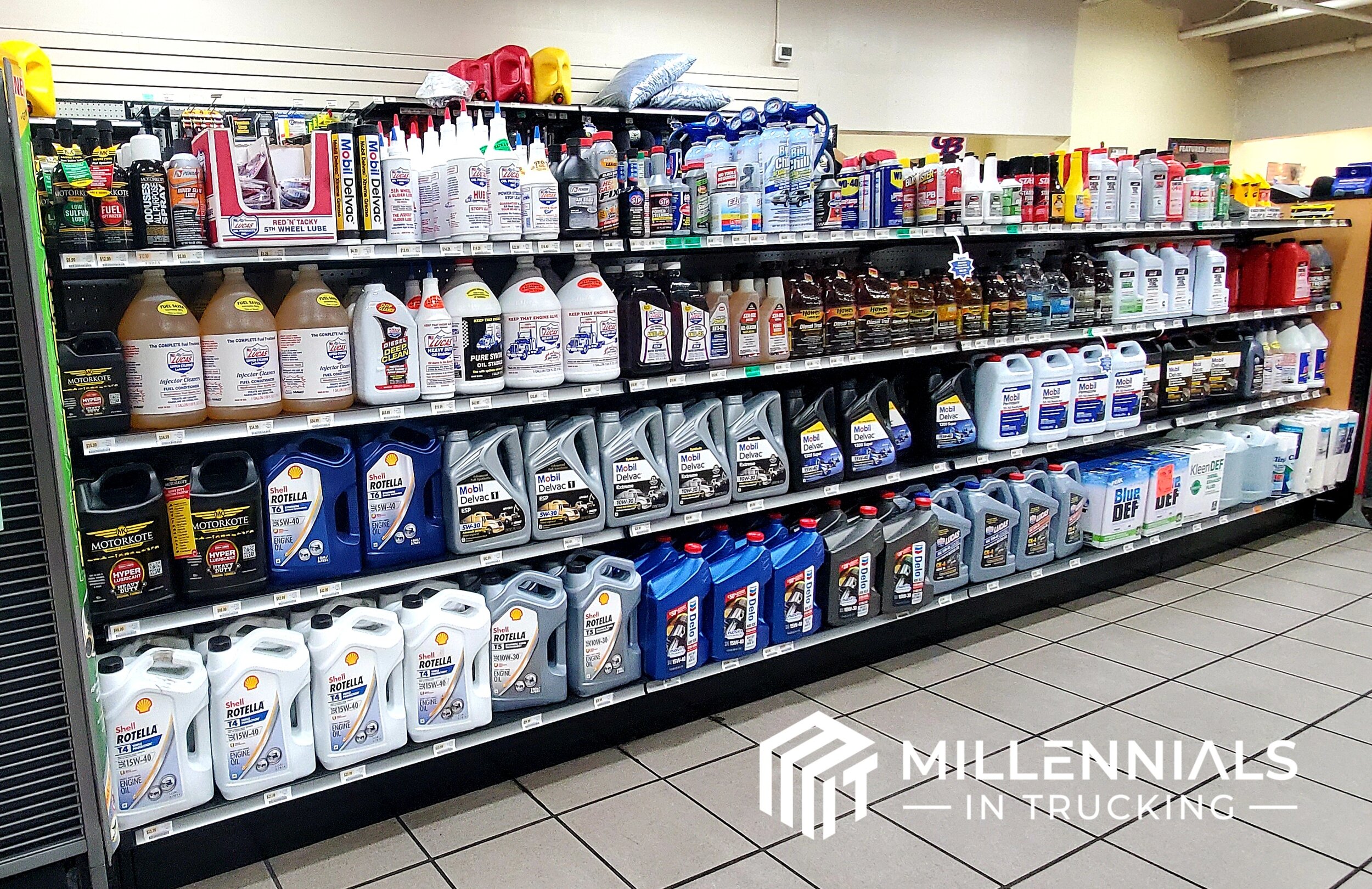
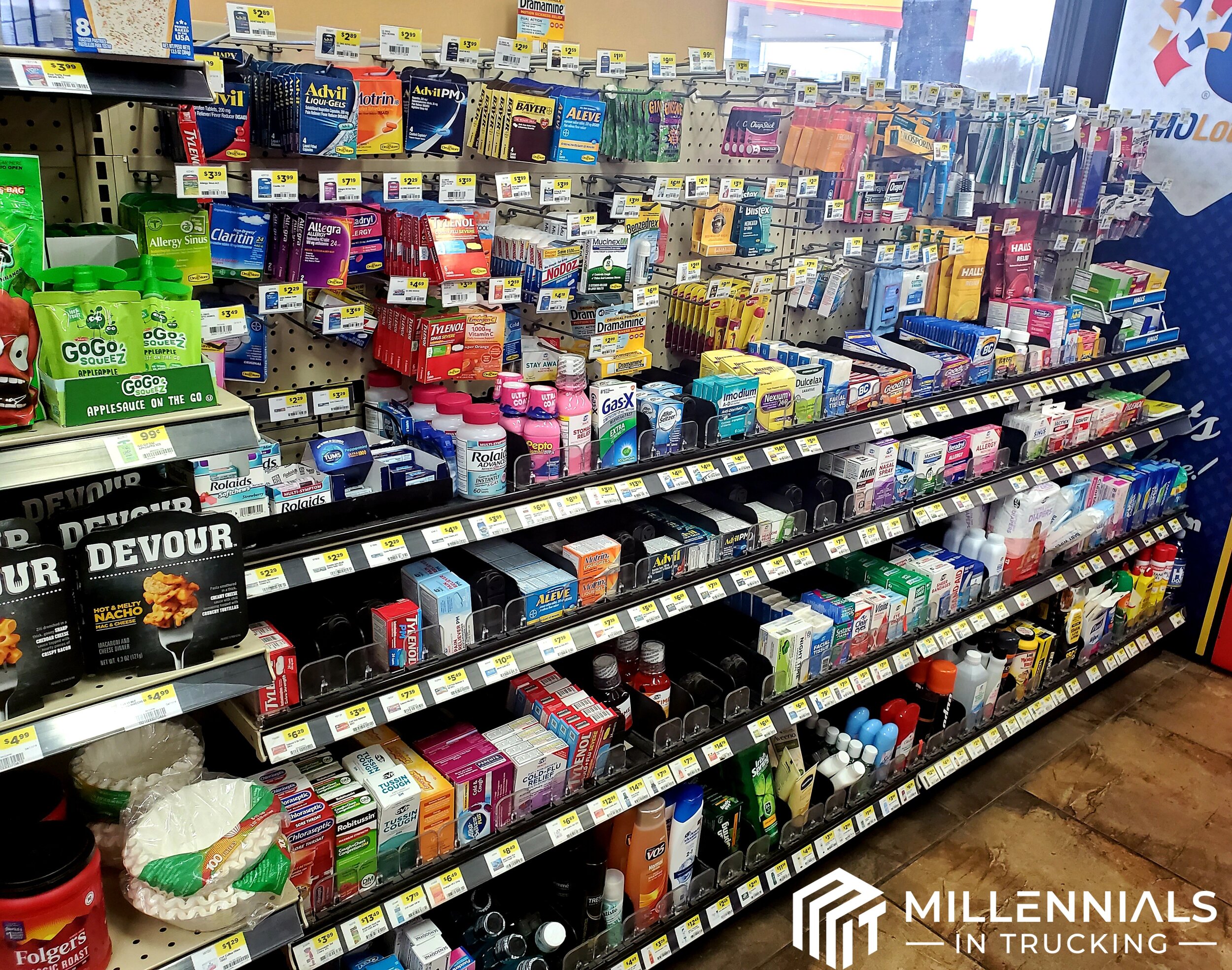
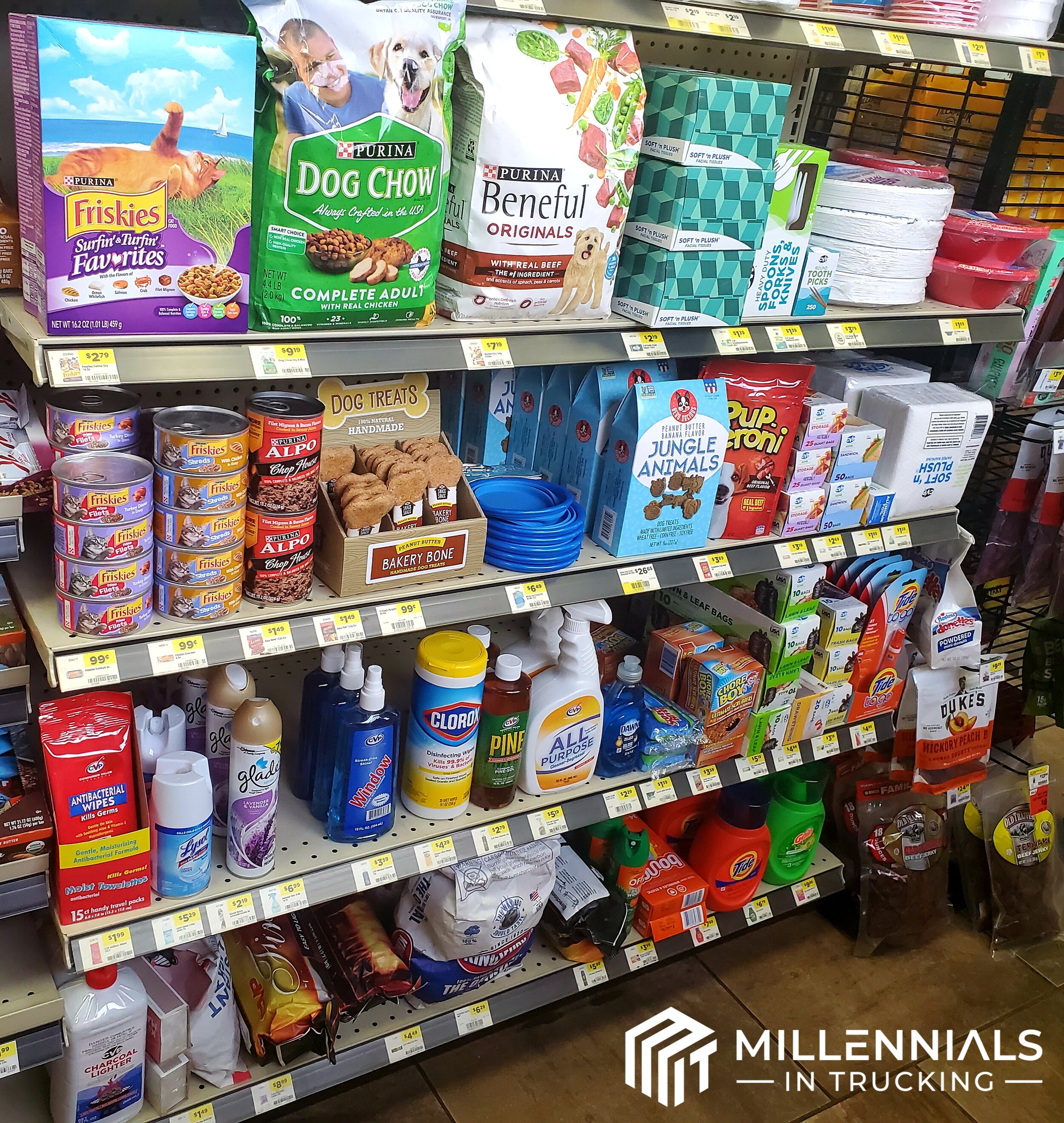
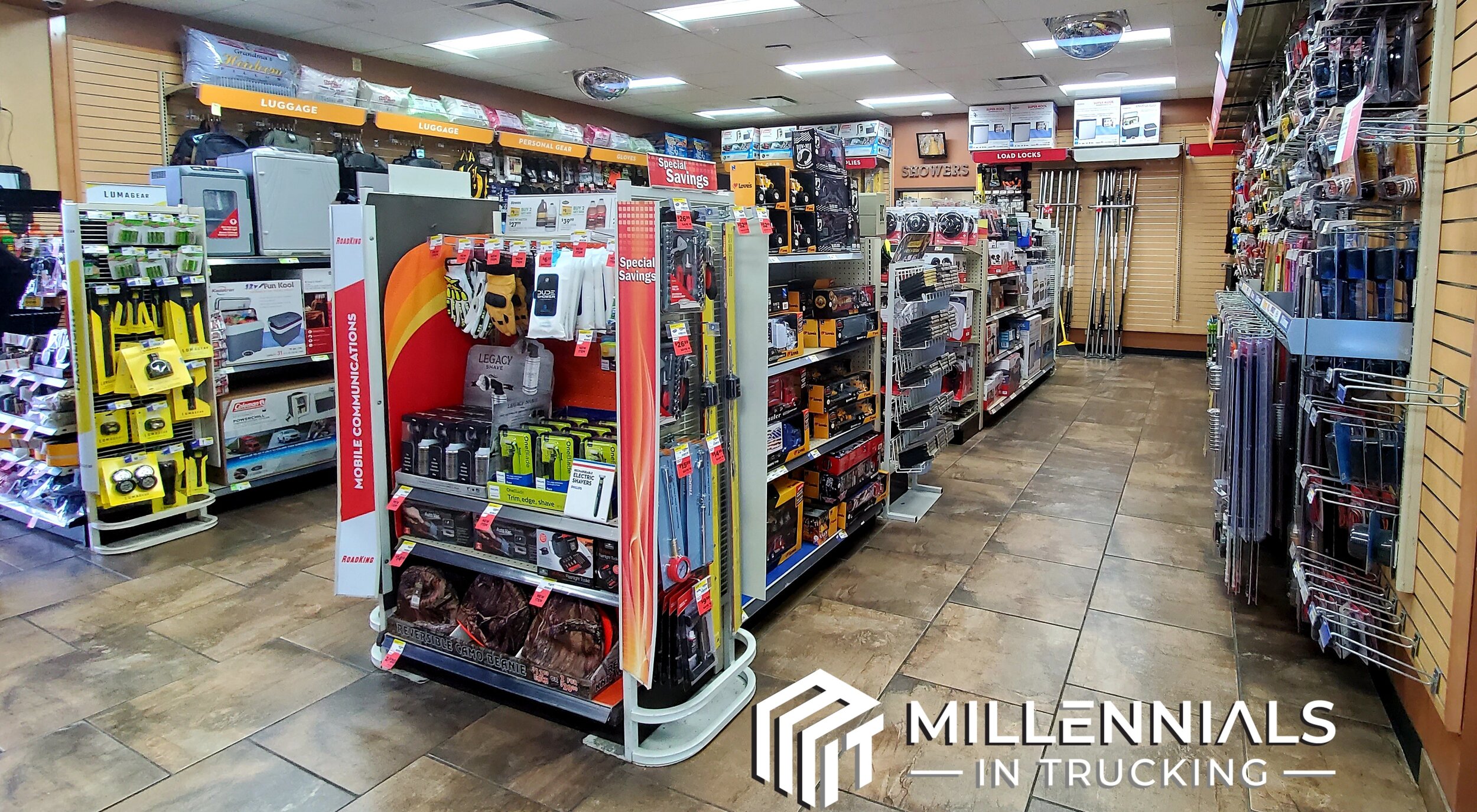
One of the most necessary features of a truck stop is the diesel shop and parts section. You’ll be able to find what you need for general maintenance to keep you running. You can expect to find your basic selection of tools, oils and lubricants, and simple parts like windshield wipers. Majority of the diesel shops are 24 hours and offer full service centers.

In addition to the basic amenities, some locations feature chrome shops, cb shops, salons, and mini “movie theaters.” How often you will utilize these options are dependent on your lifestyle while over the road, but it is still necessary to aid in the comfort and ease of access to drivers who are away from home for extended periods of time.
Cleanliness can be questionable depending on where you stop but most corporate run truck stops have someone outside cleaning the parking lot and fuel areas in addition to the store itself. You will quickly find which locations meet your standards, as you will frequent them more than you realize.
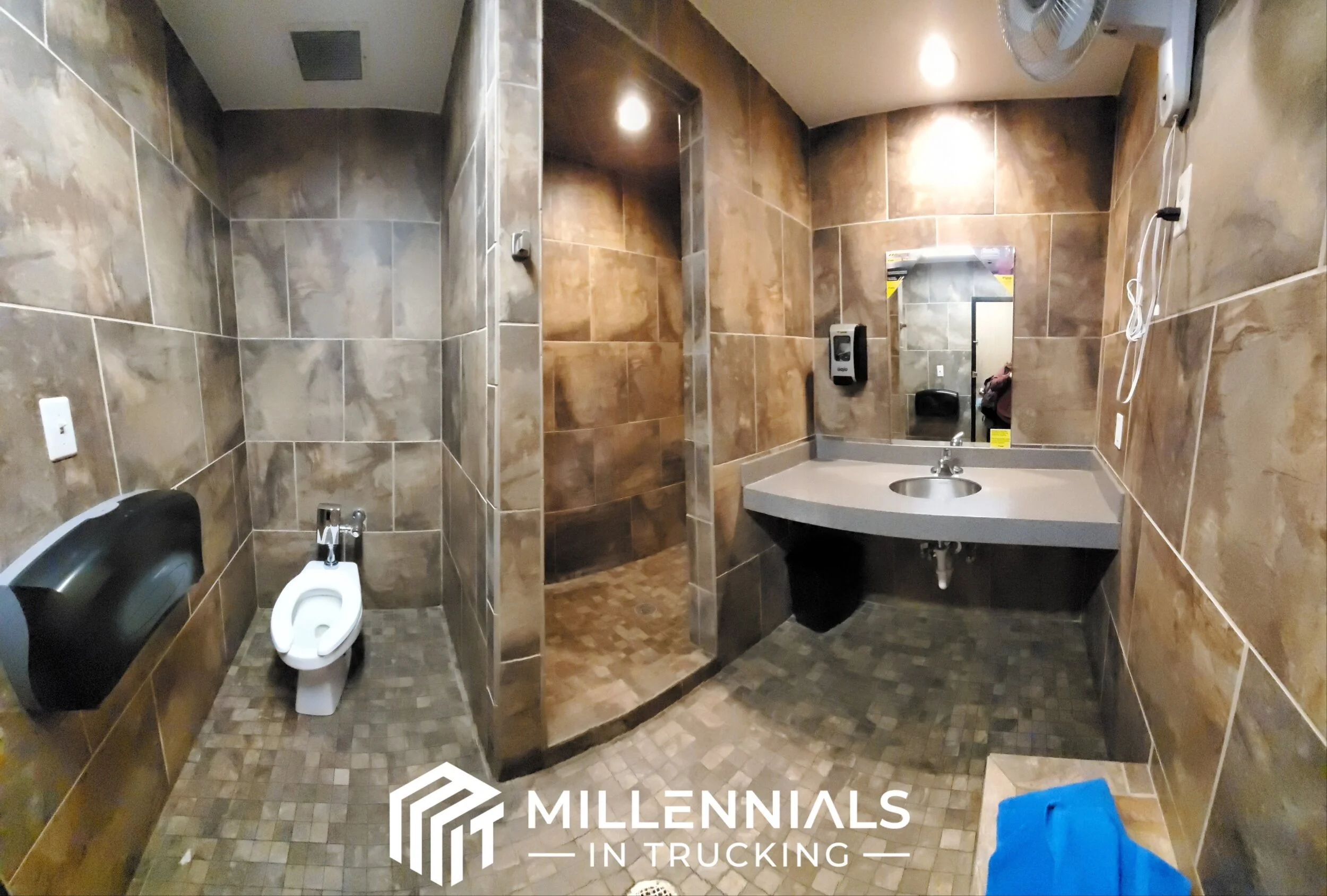
As more locations open across the nation, showers are being updated and made to look more modern in turn pushing prices to average $15 per use. They offer a full private bathroom, with bolt locks for added security (a few of us have been surprised by shower attendants accidentally). Aside from that, most showers are equipped with coat hooks, 3 speed fans, and a hairdryer. Corporate named truck stops provide fresh towels, bar soap, and liquid body wash.

Truck stop showers are private rooms that are cleaned after every use. They generally contain a personal sink, fan, towels, bar of soap, liquid soap dispensers, and a hairdryer.
So do truck stops make living as a truck driver easier? That’s up to you to decide. The food can be mediocre, general products are good to have in a pinch but are overpriced, and most truck stops typically lack healthy activities. So though a majority of their features are outdated, trust that they are working hard to catch up to the new generational shift. You might find that some locations simply provide fuel, showers, and a lit parking lot.
Welcome to your second home.

COVID-19 Trucking Updates
Let us help you keep rolling through the pandemic.
To help ease your stress over the road, we are going to keep the latest and most pertinent news updates on the COVID-19 crisis available to you here along with sources for you to get help.
News will be summarized and links pertaining to the topic will be attached for further information.

U.S. Department of Transportation News
• FMCSA posts guidelines for transportation workers providing support for hard hit areas. Including health safety guidelines when at shipping and delivery locations. Read more about it here.
• Motor carriers and drivers providing direct assistance in support of relief efforts related to the COVID-19 outbreaks are granted emergency relief from the FMCSA Hours of Service Laws. Read the declaration and rules here.
Expansion of this declaration as of 04/09/2020 extends the HOS emergency relief through May 15th, 2020. Read it here.
• FMCSA CDL waiver extends CDL expiration for 120 days for CDL’s due for renewal on or after March 1st, 2020. Read more about the declaration and other extended deadlines here.
◇
Information related to COVID-19 from the Federal Motor Carrier Safety Administration can be found here.

Trucking Locations
The latest updates from all major truck stop chains such as TA/Petro, Pilot/Flying J, and Love’s Truck Stops include that locations are open and running. All locations nationwide are also requiring masks. Showers are being cleaned more thoroughly so you can expect slightly increased wait times for a clean shower. Restaurants are limited to carry out orders though some dine in locations have reopened. Large areas of gatherings are at limited capacity such as drivers lounges and casinos. Social distancing is being practiced. Hand sanitizing stations are strategically placed near entrances/exits, and areas of high usage.
Pilot/Flying J and Love’s Truck stops have begun mask enforcement nationwide.
Travel Centers of America / Petro : Check for location updates here.
Pilot / Flying J : Check for location updates here.
Love’s Travel Center : Check for location updates here.
SappBros: Check for location updates here.
Check with the State DOT site in question for exact location information.
Use our quick link page for all state DOT websites here.
Customer Locations
You can expect some customer locations to shut down or slow down manufacturing due to local and statewide mandates and/or recent breakouts. Those that remain open are deemed an essential business and therefore will have to maintain stricter sanitation and safety practices. There have been reports of personal information being requested and temperature check points. You may also be asked to take a questionnaire inquiring as to your recent travel history, if you are experiencing any flu like symptoms, have had any symptoms in recent days, or have been around anyone who was sick in recent weeks. Most locations are requiring you to wear protective gear, including but not limited to, face masks, shoe covers, protective head gear, full body suit protectors, and/or gloves. Warehouses have also been asking drivers to sanitize their hands upon entering the facility. Please do your part when at shipping and receiving destinations to keep America running smoothly.
Driver Resources
The SBA has implemented multiple programs to help small businesses with their financial needs.
DrOnDemand allows you to have virtual medical health and mental health visits right from your cell phone. Doctors are able to examine you, prescribe medications, and guide you further if you are having any flu like symptoms. Mental health visits offered through the app are in 30 minute and 50 minute sessions. Utilize your down time because there’s no better time to take steps to improve your mental health.
St. Christopher Trucker Relief Fund
The St. Christopher Trucker Relief Fund is a foundation focused around assisting drivers and their families through times of crisis and can help connect you with valuable resources.
National Suicide Prevention Lifeline
If you are feeling overwhelmed, stressed, anxious, or fearful - you are not alone. Please don’t suffer in silence, and reach out to the National Suicide Prevention Lifeline if you are having thoughts of suicide.
The National Suicide Prevention Hotline is 1-800-273-8255.

Feel Good News
One positive ripple effect coming from the COVID-19 outbreak is the nationwide acknowledgment of truck drivers. From our government down to locals in our communities helping drivers, the outpouring of appreciation has been overwhelming to the industry. We decided to highlight some stories below.
Logan Miller, a teenager from West Virginia, uses his allowance to purchase and supply lunch for truckers at rest area. Watch the video here.
Iowa scale house passes out 500 lunches to drivers as a part of the #thankatrucker movement. See the post here.
Kentucky State Police hand out lunches to CDL drivers. Read more here.
Wyoming Sheriff assists a truck stuck on Teton Pass. Watch the video here.
High School in Washington State opens as makeshift truck stop to aid truckers during crisis. Read more here.
Sam Brock from The Today Show does a segment focusing on trucker appreciation. Watch the video here.
USA Today acknowledges truck drivers are more than just essential, repeating the famous trucking quote “If We Stop, The World Stops.” Read the story here.
April 2020 - Our United States White House thanked all of our nation’s truck drivers.
We appreciate you always and we need you now more than ever.
Stay healthy, and hammer down drivers!
Pet Friendly Roads
“More trucking companies are becoming pet friendly due to driver demand.”

Our truck travels with 6 heartbeats going down the road at any given moment, and only 2 of which are human.
Yes, I’m serious.
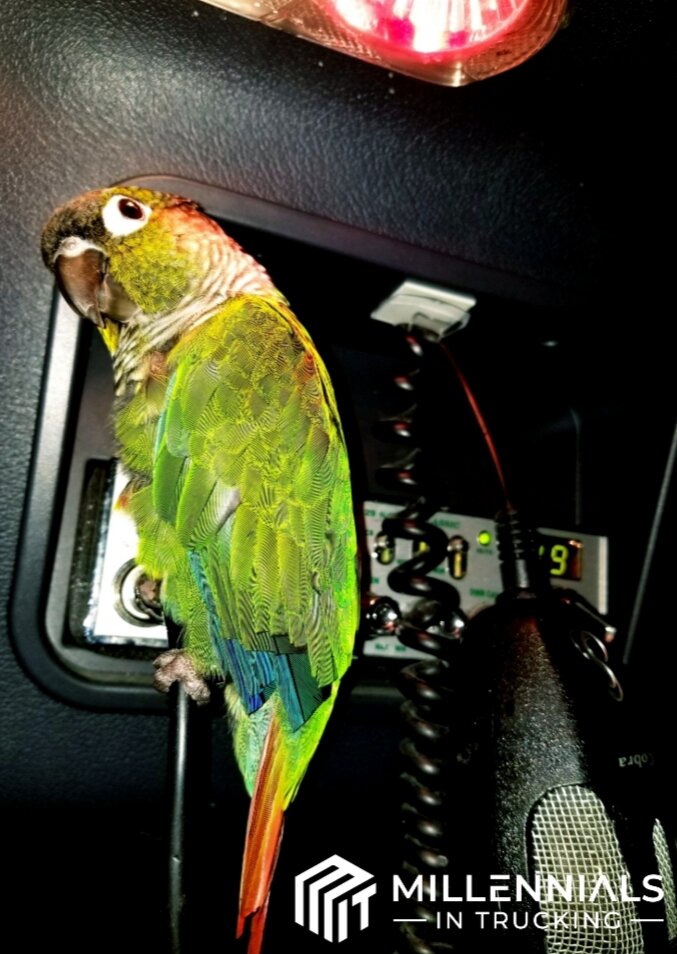
That being said, pets have become a large part of our daily lives. The trucking community has undoubtedly taken part in that statement. You can almost guarantee that within earshot of you at any trucking location, there’s a pet on-board. Dogs, cats, birds, ferrets, bunnies, and even some exotics can be seen sitting passenger in a rig or on a pillow on the dash.

Are truck stops pet friendly?
Yes. Most truck stops have designated areas just for our furry friends. Outside of tight, city limit truck stop locations, almost all truck stops have ample fields of grass for you to let your pup outside for necessities and fun! More truck stops now are implementing gated dog parks and dog runs. Some newer locations are including play equipment for the dogs and picnic style seating for their human companions.
What paperwork do I need?
Always carry a copy of your vet records, rabies tags, chip info, and a tag with identification information for your pet. At minimum you should have their latest/up to date vaccination records. Especially if you might be crossing the Canadian or Mexican border, you can be asked for proof of vaccinations.

Are all trucking companies pet friendly?
No! Though the good news is more trucking companies are becoming pet friendly due to driver demand. Some of these companies still come with heavy stipulations. They can include quantity limits, combined weight limits, nonrefundable pet fees, or pet deposits.
i.e. 2 pet maximum with a combined weight of 100lbs with a $250 nonrefundable pet fee per pet.

Are warehouses pet friendly?
It’s safe to say, most customers don’t have any issues with pets. We’ve been surprised with dog treats from security guards, and employees coming out to meet the dog they heard about sitting in the drivers blaring the horn. If the customer doesn't allow pets, your company should know in advance but if not, you’ll surely find out when you arrive. At the very least, a customer will request you keep your pet in your truck at all times while on the yard. This is a given, it’s simple common courtesy as a professional driver and pet owner. Please do your part to follow pet policies at customers.

Dogs Choice Awards 🐕
Dog Parks:
Canterbury Park, Aurora, CO
Cherry Creek State Park, Aurora, CO
Memorial Park, Gibbstown, NJ
Spanish Fork Dog Park, Spanish Fork, UT
Truck and Travel Centers:
Russell's Truck and Travel Stop
Glenrio, NM
Petro Travel Centers
Colby, KS
Bordentown, NJ
Travel Centers of America
Walcott, IA
Hebron, OH
London, OH
Love’s Travel Stop
Conneaut, OH
Hubbard, OH


Road Rules - Trucker Edition
Thoughts from within the trucking community.
This segment is from trucker to trucker featuring points we all make to eachother sometimes with the use of sign language through our windows, or verbally over the CB radio.

Here’s a brief highlight of what professional truck drivers will agree on and what the rooks need to know before taking the wheel to the highways.
Pull up when you’re done fueling. This can’t be said enough. There’s nothing worse than waiting behind a truck that isn’t fueling and the driver is M.IA. Don’t make another driver wait for you to run your errands or to take your 30. Pump your diesel, DEF, and reefer, and move along speedily. If there isn’t another truck in the pull up, you should be able to get all 3 services in 15 minutes. We’ve all got somewhere to be, so don’t assume another drivers responsibility to adhere to your schedule if you’re the type to throw a wrench in theirs.
Let another truck over. You know first hand how hard it is dodging four wheelers all day than to add to the headache. If you can get over safely, then do so. Be courteous and watch out for one another, give your fellow driver the space he needs, and set the example.
Don’t be a “passhole.” Don’t speed up when another truck is trying to pass you. You didn’t realize your adaptive cruise control set you at 60 MPH in a 70 MPH speed zone but don't punish the next driver for it. You leave them hanging out in the left lane to slow down traffic even though you were the one falling behind. Let the driver do their thing to pass smoothly, and wait to get back to speed when you’re both in the clear.
Stay off my back doors. You wouldn’t expect another trucker to pull up on you, like you personally were the reason they're running late but it will happen. Don't be that guy. The easy solution is to watch upcoming traffic in your lane so you know ahead of time to get over so you can pass quickly and safely. If you think trying to keep a football field distance in front of you was hard, imagine trying to do so with another truck stuck to your bumper, pushing you down the road at 65 MPH. Respect the space behind that trailer in front of you because you know better.
Do not cut off another truck. Period.
No one likes the Jake Brake Jack. You know the guy; bumper to bumper traffic and he’s got his jake brakes set on max to let everyone know he's rolling 10 feet forward. A true professional driver knows how to keep safe distance in heavy traffic with light pressure on the brake pedal. Jake brake Jack doesn’t consider that he’s got multiple team trucks around him and someone’s trying to sleep, he just wants to put his straight pipes to good use. Allowing your diesel motor to roll on a low gear resistance and you will find that you barely need your brakes in a slow crawl, let alone the jake brake.
Utilize your marker interrupter, or don’t? This is an ongoing debate between truckers, with no end in sight. Some truckers hate that you’ll flash your high beams to let them know they’re clear, then there are the rest of us that are less prideful. You’ll find yourself in a blinding storm with rain, snow, or ice building up on your side view mirrors, to the point that you're hesitant to get over, but then the driver behind you gives you a quick flash, and it sets you at ease to merge over. You won’t appreciate it when you’re blinded by high beams in clear weather, but you will understand the calming effect a quick conformation can bring on rough roads. There is no correct way to communicate to other drivers; high beams, marker interrupter, or light control panel - either way you will get your point across. Whichever suits you, this small line of communication makes all of our jobs just a little bit easier. Looking for a rule of thumb? In bad weather, flash your high beams, and in clear weather use your marker interrupter.
The left lane is for passing. For truckers, the middle lane is our left lane. Due to a ridiculous and outdated road system that will cut us off from using the 2 left lanes on a 4 lane highway, or the 3 left lanes on a 5+ lane interstate, you will notice the battle between these lanes in your first few days of driving a rig. Use your defensive driving skills with full intention to keep traffic flowing. Yes, you will have to be on constant alert for merging traffic entering the interstate, and yes, you will come up on a slower truck eventually - but there is nothing worse than being hung to dry out in the wrong lane when you're attempting to pass impeding traffic. If you block the left lanes, you are causing a much greater slow down behind you while contributing to unnecessary brake checks. The left lane is for passing, so get back over.
Road Rules
“Sincerely, The Trucking Community”
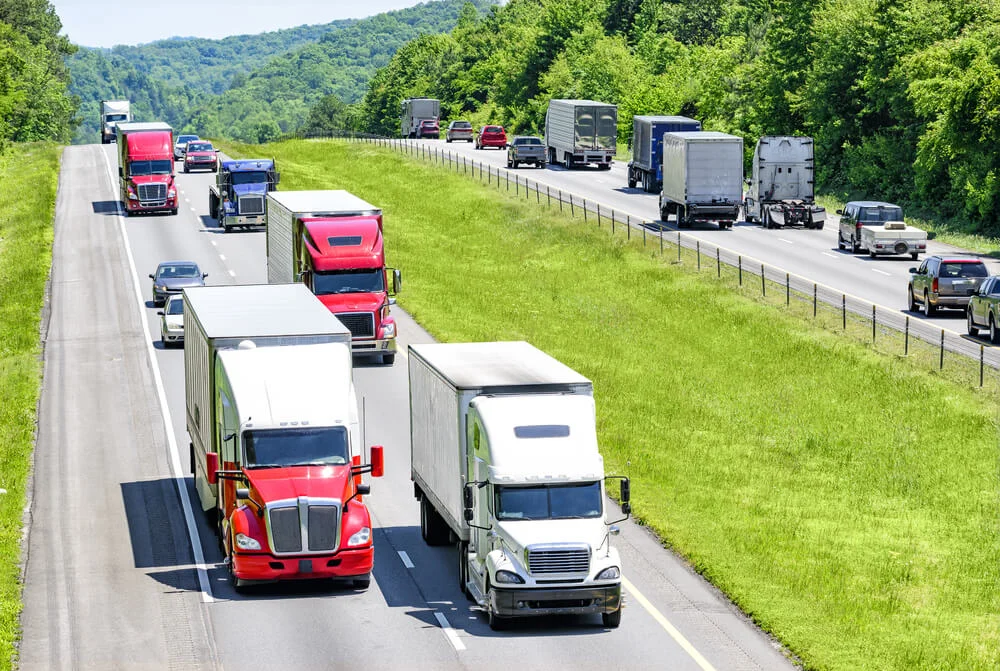
Let this be the direct line of communication from the trucking industry to the two wheelers and the “four wheelers.” Professional truck drivers have learned to respect the roads, and all of the travelers, road trippers, and commuters sharing it with us. Though the only point becoming a lesson to us, is the influx of avoidable accidents we see on a daily basis. These simple tips and motivation on your part to practice these tips, will show you how to become a better driver and allow truckers to more easily share the road with you.
We have compiled a list of “Trucker Road Rules” for driving around rigs and big trucks alike.
▪︎ First and formost, stay off your phone. It’s sad to have to say, but it’s become a game of frogger to swerve around all the texters drifting into our lanes. Pay attention while you’re behind the wheel and wait to find a safe place to use your phone.

▪︎ Let the truck merge. If you are coming up on a big truck with his left blinker on yet you decide to accelerate to get past him - you are slowing the driver even more which will in turn, lead to a much longer slow down. If a driver turns their signal on, trust that it’s for a good reason and our prompt timing can be crucial for everyone on the road. Allowing the truck to merge will keep traffic flowing smoother and safer. So keep in mind, the next time you come up to slow truck trying to regain speed, know it was likely caused by the individual who decided not to allow that truck to merge due to their own ignorance and disregard.
▪︎ When merging onto a large interstate or highway, freeway traffic has the right of way. As soon as you turn onto the on ramp, you should be getting to highway speed and checking your mirror for vehicles traveling in the right lane. This will allow for a smooth and safe merge. If there is a large truck in the right lane, respect it, because if you try to argue with the rig, you will not win.

It takes the length of a football field to stop a big truck safely.
▪︎ When driving next to a big truck, be mindful and do not sit in our blind spots. (Next to the doors of the cab and along side the trailer) We are not racing so please pass and keep it moving.

▪︎ Heed the golden rule - “If you can’t see my mirrors, I can’t see you.” This mean when passing a large truck from behind, please pass to the left as it will give the driver a quicker line of sight of your vehicle. The blind spot is much larger on the passenger side of trucks. If you pay attention, more than likely we are trying to get back into the right lane, and you’re simply slowing us down from getting over and “out of the way.”
▪︎ When passing a large truck, you should wait until you can see the entire front of the cab in your rearview mirrors, from the pavement to the roof of the truck. This is a good rule of thumb for leaving safe space in front of a rig for everyone’s safety.

Simple gauge for a safe distance when merging in front of a big truck.
▪︎ The same goes for riding behind a big truck. If you are riding too close behind a truck or, “knocking on our doors”, it’s going to be impossible for you to see what is happening in front of the truck. Therefore if an unexpected situation leads to an emergency stop, you won’t know where to turn to avoid the issue or have enough time to react, and it will be too late.

Victim of Texting while Driving
▪︎ When traveling in a mountainous area, it’s key that you understand what is going on with that big truck. When traveling on an incline, trucks lose speed and will likely be traveling well under the speed limit. Those losing speed or traveling under the speed limit, will turn on their flashers to alert others. Be cautious for these slow moving trucks. Please stay to the left and pass promptly.

▪︎ This is opposite for the downgrade, trucks will start to gain speed due to the weight they’re carrying and will need to keep it slow, as to not lose control or lose their brakes. You will notice lines of trucks continually braking going down the grade. So the same rule applies, stay to the left and pass promptly.

Truckers all across the states use the same language when traveling down the highways and it’s all in the lights…
• Consistent braking combined with four-way flashers mean traffic is slowing rapidly or coming to a complete stop.
• Flashing high beams is a simple signal for clearing you to get over safely or, the more commonly known, request for you to merge to the right so we pass safely.
• Quick use of the four way flashers can also be a way to say thank you for letting us over.
• Flashers (while traveling normally) can also communicate that there is a hazard up ahead or on the immediate shoulder. You might notice the truck inching closer to the dotted lines or split the lane, to allow more space from the shoulder. Allow the truck space for the hazard to not be made worse.
Bottom Line
Paying attention to big trucks over the road can deter you from danger or even save you from a traffic ticket. Watching truck traffic can tell you a lot about your surroundings and current road conditions. For example, if you notice multiple trucks getting over from the right lane, it’s likely that there is a hazard up ahead, either in the right lane or off the shoulder. You’ll quickly find out that’s not a lane that you want to be in. You can also easily avoid a ticket; when you notice a convoy or large group of trucks going slow, there’s a good chance of a smokey up ahead. With that in mind, remember that not only is our line of sight better and our driving skills more refined but statistics prove we are more likely to survive a crash. Don't end up on the other end of that statistic and learn to share the road with the ones who watch over you. At the end of the day we want to get home to our families, as much as we want you to, too.
Sincerely, The Trucking Community
“Drive like your family is in front you, and the state trooper is behind you.”

CDL School
“Their pay rate out of school was less than half of ours…”
If you’ve noticed all the trucking ads claiming they will pay for school, and set you up in a career, it’s real. The reality is, they will set you up with the CDL school nearest you and will cover your costs in full - in exchange for you signing their contract… and what they won't tell you is what you should be weary of.
CDL schools range significantly in cost, anywhere from a few thousand to upwards of $10,000 at private institutions. Sticker shock much? Here you’re going to find what you need to know to make the best choice for your situation.

Company Sponsored Training
The CDL school we went to was a partner CDL training school to a large trucking company, so most of our peers were company sponsored students. Their pay rate out of school was less than half of ours, because we had our expenses for schooling covered; allowing us the freedom to choose what company we wanted to join. The company sponsored students also didn't get to take advantage of quarterly bonuses, yearly raises, or weekly guarantees, as per their contract. (All points you should be raising when discussing your career with the recruiter.)
There are pros and cons to going about company sponsored training. You will sign a contract to work an average of 9 months to 1 year after your training. They will start you out at a much lower RPM (Rate Per Mile), likely to recover the money they invested into your schooling. You will find yourself upset when you start to talk to other drivers at the truck stops, because they are making double or triple what you are, and they're doing the same job with the same level of experience (or less). The good news, is that you can expect a raise after completing your time under contract and you have the flexibility to move on to a better paying position with the experience you have. Fortunately, you'll be joining an industry in demand, and you can be in a new truck in a matter of weeks. It's really that simple (though not suggested). You might even find that it's slow, you're not getting a lot of miles, sitting around, and burning a hole in the jump seat; but most large companies have a weekly guarantee, (if applicable) which is another safety net to keep you from going unpaid. These can range anywhere from $500-$1500 a week. The guarantee is that if you don't earn a certain amount of revenue or drive a certain amount of miles, they will still compensate you a flat rate. Be careful though, there are usually a few stipulations that come with these guarantees. (i.e. being available, running less than a said amount of miles, etc.)
A general recommendation is to get a solid 2 years under your belt at one company to show stability, safe record, and put some seasoned miles under your belt. It will make you more desirable for other trucking companies and start to qualify you for local driving jobs, if that's your goal.
With that being said, company sponsored training is a pretty solid guarantee that you will have a job right out of school. There is no better feeling than going through schooling with a job waiting for you on the back end. Not to mention, free of debt associated with CDL costs. Bottom line, the pros are no debt and guaranteed job placement. The cons are the lengthy contract, a lower rate per mile, and possibly no pay guarantee.
Financial Aid
Financial aid is an option that most people don't think to take advantage of. Contact your local schools with CDL programs and invest some time inside of their Financial Aid offices. You will find there are many grants and scholarships available to you for trucking school costs. Whether you are a displaced homemaker, a military veteran, or a 21 year old kid that wants an alternative to college, you'll see there are ways to get the cost fully covered or at least partially.
Other options include local colleges, technical schools, Goodwill Career Centers, and/or your local County Office for job placement programs and/or secondary schooling programs.
You should also inquire about a cash discount at your local CDL schools.
The benefit of having school paid on your own behalf is the freedom to choose a company, freedom to move yourself to a better fitting position at any given time, and getting to take advantage of everything a company have to offer.
Loans and Lines of Credit
The last option we would ever recommend are charging your credit cards, taking a loan, or opening lines of credit with private CDL schools. You need to be financially responsible and know for certain that trucking is what you want to invest yourself into, considering CDL school costs. If you are looking to join the industry because of current financial burdens, you have better options than increasing your debt before joining a field that’s new to you.

What to Expect in Trucking School
“We watched countless students quit while on the yard…”
Trucking schools range from a few weeks to a few months. Considering you will (and should) go through additional training when you get hired on with a company, I would recommend either ends of the sprectrum. The school we attended was only concerned with getting a license in our hands and focused solely on passing the CDL paper and final road test. We started with a school local to us in Atlanta, and it was a mere 3 weeks long. We watched countless students quit while on the yard and one was disqualified immediately after failing to follow instructions that would have prevented him from mowing down the schools fence with the back of the trailer.

Georgia 2018/2019 CDL Drivers Manual
Our first week was learning the CDL Manual from the Georgia DDS (almost verbatim) since we had to have permits to legally be in the drivers seat of a CMV. By the end of the week, we were Georgia CMV textbook fact spitting zombies. To be exact, we started studying Monday and tested for our permits on Friday so it was a quick turnaround and nonstop studying. The following 2 weeks were practicing yard and road skills. The “road skills” covered (at most) a 20 mile radius, from school and back, with a small section of interstate driving. We had to show efficiency in our turning, shifting, acceleration, deceleration (down shifting), stopping (without stalling), and scanning intersections and railroad tracks before crossing. The yard skills covered were straight backing, off set, parallel parking, and the all-but-famous, alley dock. We were put on a scheduled rotation, so everyday you would get practice on each skill, keeping everyone fresh for test day. By week 2, we could focus on which skills we felt we needed the most practice on. Our instructors ranged in experience from 9 months (not kidding) to one with 4 million miles under his belt. That should tell you which one we talked to more.

The lot we practiced on back in 2015.
Come test day, our class had 6 of us testing out. We met with a handful of DMV employees and started first thing in the morning. The way our school had set it up with the DMV, one of the instructors from the school drove us out to the test site, and luckily, was able to show us the ‘test drive’ route and point out the common errors made by past students. First came the knowledge test which was a fancy way of saying pre-trip that included the air break test, then yard skills, and finally, the test drive. A few immediate disqualification examples were; stalling upon stopping, hitting a curb, not scanning an intersection before passing through it, or not being able to recite a sign you just passed. Fortunately for us, we both passed on our first test attempt and were the only ones to walk away that morning with our full Class A CDLs!
On our last day of school we were bombarded by company recruiters. Which gave us more company sponsored pens, hats, recyable bags, and rulers than we could use in a lifetime. Little did they know that we had already chosen a company to venture with and had been prehired during our initial training; so we knew exactly where we were headed next and had already had a bus ticket booked for orientation! It’s important to have an idea of what company you’d like to join in the industry so you can go fresh out of school and be ready for your orientation after your handed that shiny new CDL!