
Finding Your Fleet (Part II)
A recent post shared by a fellow expediter made some great points when it came to finding a small fleet to work for. We’ve decided to highlight her post and add to it, from a former driver and now owner’s, perspective.

“If you want to make $1500 each per driver, you have to accomplish that yourself. You are the maker of your paycheck. You have to learn how to make that happen and when you run percentage, trying for a set amount per week doesn’t always work. Sometimes it’s how the month ends.”
Running as a self-dispatching contractor like we do here, you create your own destiny because YOU are your dispatcher AND your engineer. You have to decide what load it worth what, what your minimums are, which areas are best, where to relocate, etc. Some teams will shoot for a weekly goal, or will run only a certain region of the states – it doesn’t matter how you get to your financial goals; all of these methods can work. You genuinely must figure out YOUR strengths and how you like to run as a team – what works for you both. We found that we can lose an entire week and still hit $30k+ in a month, but that comes with years of experience and being way beyond the “FOMO” phase. We run day to day, don’t plan too far out, and we love it that way because found that we hit our goals with minimal stress.
“As a team joining expediting, even if you have been team driving for 25 years - if you haven’t run percentage and expediting, it’s a different way of doing things. We ran 17 years in tractor trailer, by the mile, 20,000+ mile a month. Coming here was an adjustment. You don’t run constantly like when you’re running per mile as a team. It’s a ‘work smarter, not harder’ deal. Sure, you can run yourself to death running constantly in a big box company as a super team, making the same or less, (taking the quickest shower possible, eating only sandwiches or junk etc.) but that gets old, and that’s why most of you came here. Dispatching yourself is a game, it’s calculating trying to decide which load to take, and which load will put you where the ‘money load’ will be if it pops on the board. It’s aggravating and rewarding. You have to be open to learn new things and not be stuck in your ways.”
She’s right – coming from tractor trailer was a major adjustment. It was night and day to go from mileage-based pay to percentage. Switching that mentality took time but was so essential. If not, you will run your per mile rate down and work harder for less. You will no longer have to run 5,000+ miles a week as team to make a good paycheck, and instead you can work 3 days on 2 loads and make the same that you would on 2 cross country runs. You’re no longer booked out for the week, now you’re booking a load for today or tomorrow, never knowing where you’re going next after delivery, or how much you’ll make tomorrow. This can make transitioning tractor trailer teams very antsy, because they’re looking for miles, not at the end goal for the month. We like to say to give it at least 6 months before you give up on expediting, especially if you’re coming from tractor trailer.
“When you start out here, your company is not going to tell you how to pick loads, how to bid, or anything. Just that there is a load board, how to log in, and hit accept. If you try and do it on your own, without guidance, it will take a lot of trial and error. You will get frustrated. So, if the fleet you go to has mentors, or you meet a team that offers to help, take them up on it. Let them show you the ropes. There are rules that your company will follow to decide who wins a load, and you need to understand them. You need to understand when a mentor or fleet owners tells you certain areas are dead zones, that they are telling you to avoid headaches. There will be a time for you to go out west, but the first week you are out on the road is not one. Just remember, we are always learning new things, if you think you know everything already then you are one of the ones that has a lot to learn still.”
Coming out here with a know-it-all mentality will quickly humble you. We have been at this almost 8 years and still find some of our own ‘guidelines’ changing, because the landscape of our company is constantly changing, and we must change with it. That’s okay because the seasons don’t change – trucking overall has its busy and dead seasons, all of which we are already aware of and therefor plan for. However, it can be very hard for new teams without guidance to come out here and try to make it work. Not that it can’t be done however, you will learn what loads are worth their rates, and which aren’t. You will start to form a minimum to run into certain cities, due to the cost of tolls and/or relocating after delivery. You will learn which customers don’t care about detention, and will take their time to load you, putting your early morning delivery at risk, and therefore minimizing your chances for a next day load, so maybe you’ll charge double for that run. You will learn the seasons and you will start to be able to predict when the leaves are about to fall before they have even changed color. Be patient when you’re learning the landscape, absorb all that you can, and learn what works for YOU. We advise all of our new drivers to “Forget what you think you know, and don’t apply rules from a different side of the trucking industry to the world of expediting because you will only set yourself up for failure.”
“Don’t believe everything you hear. If someone tells you they make ‘this’ every week or month, ask for proof. If they don’t want to show you numbers, then it’s probably inflated. If an owner tells you to not talk to other drivers, then someone has something to hide. But also, not all drivers tell the truth, whether it’s to keep you from taking “their” loads, or to seem better than you. Take a lot of what you hear, especially on social media platforms, with a grain of salt. Some of us are honest and just want to help, while others don’t feel like they are anything unless they are making someone else feels small. You are not stupid for asking questions no matter how big or small, and if they tell you how stupid you are for not knowing they are just being bullies.”
This is a constant and sad reality of the world we live in – people lacking integrity and character. Expediting is a small industry; most of us know each other, and word spreads quickly, even the false rumors. Toxic fleet owners and lackluster dealerships are all well-known and constantly confirm the rumors. You can’t hide out here, and that’s the beauty of the double-edged sword that is expediting. This is why it’s important to get multiple opinions or outlooks in the industry, to weed out the nonsense. If someone gets intimated by you asking questions, walk away and move on, but don’t let it discourage you from continuing to ask questions. People who have been out here for a while think they know everything and become short sighted, forgetting that they were new at one point too. They are plenty of us out here willing to help and provide real guidance or give you our own opinions without being intimated. There is room for all of us to succeed and thrive in this industry.
Mental Health and the Reality of Driver Burnout
“…just like the industry we inherited, we also inherited the culture.”
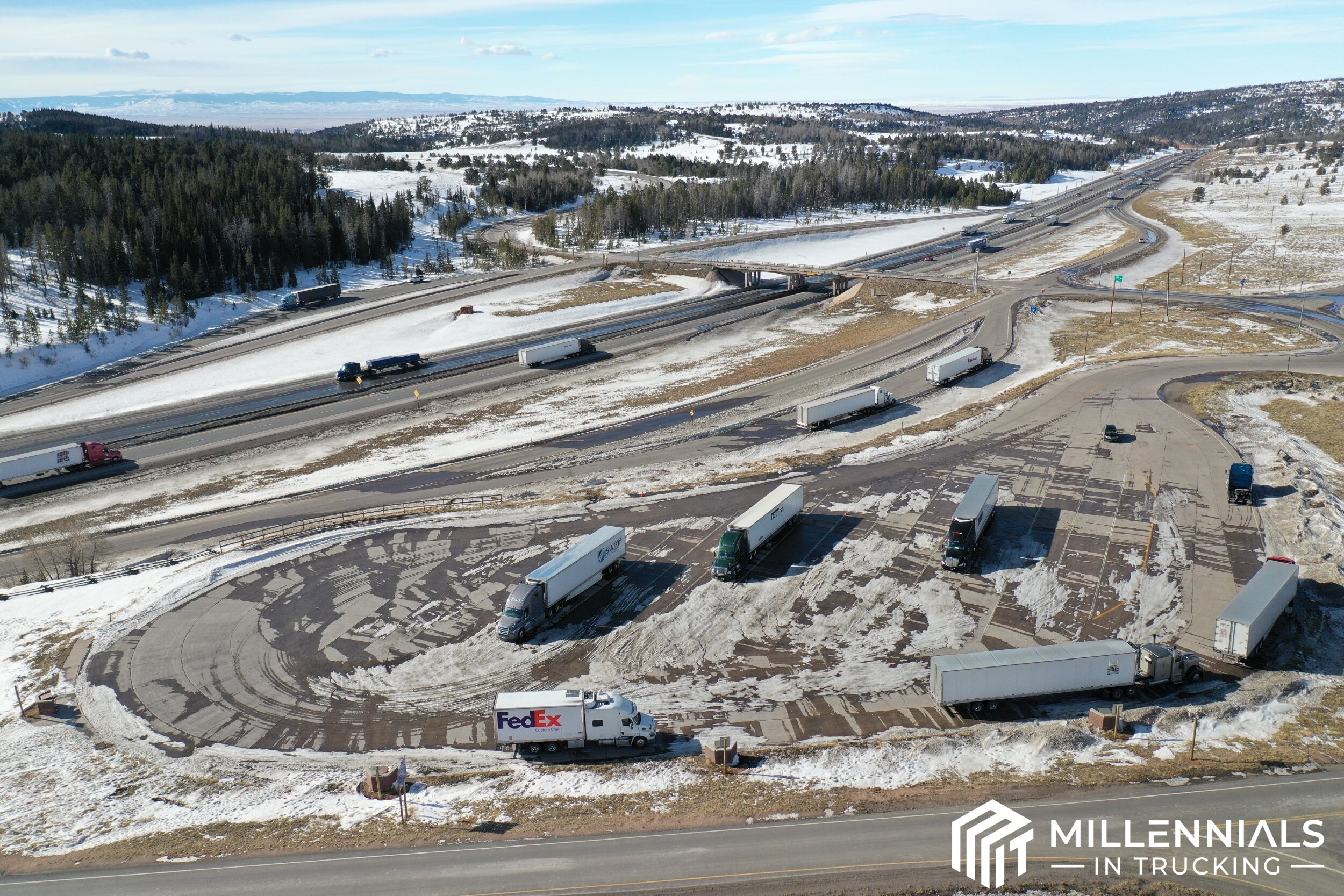
Mental health has been much less stigmatized within the millennial generation. In fact, you can frequently overhear conversations between us regarding mental health; going as far as sharing tips and insight from recent therapy sessions or bonding over triggers and sharing our stories of ways we learned how to better process those past traumas. We aren’t ashamed to discuss these issues, because we inherited just as much of the culture as we did the industry.
Now we’re trying to fix it, and the best way to start is by talking about it.
Truck drivers suffer the highest rates of mental and physical exhaustion. The truck driver turnover rate in 2019 was at 91%, estimating that a mere 9 of every 100 new drivers would stay in the industry. We have a long list of issues in the trucking industry, but one of the root causes for this high turnover rate was driver dissatisfaction. So if you really love trucking, see yourself in it for the long haul, and want to lessen the load of your burnout before it drives you to hang up the keys - you have to start with you as the driver.
Driver burnout is real, and we’ve all felt it at one time or another. You finish out the week, just to end up laying in bed all weekend - only getting up for snacks or to pick up a mobile food order at best. Finding the motivation to do your laundry, tidy up your truck, or taking the dogs out, all of a sudden feels like a burden. These days will happen - allow yourself to have a bad day, it's okay. Be lazy and don’t feel bad for it - you need the rest.
We know that trucking is a balancing act because home time isn’t always timely, or even certain at some points. So setting aside time for therapy, your hobbies, or some self-care can seem like a daunting task with more reason not to do it. We’re here to tell you however, you can do these things over the road, and we hope we’ve convinced you as to why you should.
We are more than thankful for today’s technology, as it opened the door to telehealth so now there are multiple sources for therapy on the go. A few we can personally recommend are DrOnDemand and Teladoc. Both of these platforms allow you to have both video and phone calls with licensed psychologists, or psychiatrists if you need medicinal treatment in addition to talk therapy.
Start to implement gratitude and refocus your energy on self-care. Treat yourself to a manicure and/or pedicure at a salon, or really splurge and go for a full body massage at the spa. Get out of the truck, save money, avoid people, connect with nature and go camping or find a nice walking path in a local park, an all around win. Then on days when you’re feeling unmotivated, or just down overall - remind yourself of all of the things you’re grateful for. You can even start a gratitude journal, and on those bad days when you feel like you can’t find a reason to be thankful, you can reread what you’ve written on days before, and it can come as a small reminder that the moment is temporary.
Reconnect with your hobbies by making them mobile and taking them with you on the road. Do you have a love for exercise? Kettle bells, dumbbells, and resistance bands are some of the easiest pieces of workout equipment to travel with. Love photography? Grab your DSLR, GoPro, or your drone, and find the best area near you with the subject you love to photograph most. Or maybe you’re more a gamer? Draw the curtains and get lost in your favorite video games! Maybe you’re a foodie or grill master? Find yourself a portable grill or slow cooker to fit your needs and treat yourself to a home cooked meal in your down-time. Make the road your home, because that's where you're spending most of your time.
It’s easy to lose yourself over the road, but we want you to stay en route. Before you log yourself into the sleeper and head back to the bunk, we want to remind you to show yourself compassion. Allow yourself that time to decompress, to breath, to accept your mistakes, to grow, to heal, and to better enjoy the roads trucking can take you on.
We live life with a “day by day” or “one mile at a time'“ mentality, and we challenge you to as well.
There are resources readily available for you when you’re ready to take the journey to improve your mental health - you can start with the National Alliance on Mental Health, the Substance Abuse and Mental Health Services Administration, or the Trevor Project, specialized in helping our LGBT community.
If you or someone you know, is struggling or in crisis, help is available and you are not alone.
Call or text 988.
As a reminder, please feel free to write into us with any questions or topics you’d like us to cover - you can even do so anonymously.
Reasons to Become a Truck Driver; The Good, The Bad, and The Ugly
“After all is said and done, trucking is still the millennials dream job.”
People frequently ask us why we decided to become truck drivers, seemingly due to our age. One of our first steps we took before joining the trucking industry was going to truck stops to talk to drivers personally. In those visits to the truck stops, we were told by some drivers not to bother, to find a better field, and a few sarcastic “good luck” wishes were thrown our way. Though we didn’t let it stop us, it was something we have come to understand 5 years later.
Trucking wasn’t hard to fall in love with but it has come with it’s fair share of monotonous crap. You’ll hear the term “hurry up and wait" used a lot. We work in a demanding industry where your company puts more hurry in the freight than some of the shippers and recievers do. There will be times that you sit for hours waiting to get loaded or unloaded. Customers will drain your clock and they won’t care, or so it seems.
That same customer will have no driver facilities for you to sit and wait in, and some won’t even have a restroom for you to use. It will come to you as a slap in the face, as it does for all of us. One of the serious faults in this industry is the thankless rapport and downright disregard towards drivers but every industry has its faults, regardless of how much you come to love it.
Then you will come across the customer’s who will greet you like you’re human, that will welcome you in and immediately show you where the restroom is after offering you a hot cup of coffee or candy off their desk. Right after leaving the security guard who asked what kind of dog you had in the cab, before asking if they could give said dog a delectable treat. Your next customer will offer you a place to park to wait, or recommend the best restaurant in town to go check out while they ready the freight. So a glimpse of hope still lies before the latter.
After all is said and done, trucking is still the millennials dream job. You get paid to travel the country with the freedom of a self operating business. Your annual “rookie" income will have you grinning ear to ear and you can increase its value by taking what you learn to become a true business owner. The trucking industry has a very serious (and only growing) demand in all areas of specialty, so the sooner - the better.
Many drivers will tell you they came out here for financial stability. Trucking surely can help pay off large amounts of debt in a short amount of time. Unfortunately, the job comes with many temptations, like gambling. Too many drivers will spend time at the nation’s casinos all along our interstates because they’re also very truck friendly. If you’re disciplined, this shouldn't be an issue. You can find yourself sitting on a nice savings in no time.
Then there’s the opportunity for growth which is very evident. Something that came easy for us when discipline, integrity, and curiosity were steadily applied. This industry was made for the entrepreneurial type when you learn of the amount of divisions available to you just for holding a CDL. Pace yourself, be eager to ask questions, and learn as much as you can under a company before deciding to take on the responsibility of becoming an owner operator.
If you have any questions about how to get started in the industry, give us a shout here.