
Road Rules - Trucker Edition
Thoughts from within the trucking community.
This segment is from trucker to trucker featuring points we all make to eachother sometimes with the use of sign language through our windows, or verbally over the CB radio.

Here’s a brief highlight of what professional truck drivers will agree on and what the rooks need to know before taking the wheel to the highways.
Pull up when you’re done fueling. This can’t be said enough. There’s nothing worse than waiting behind a truck that isn’t fueling and the driver is M.IA. Don’t make another driver wait for you to run your errands or to take your 30. Pump your diesel, DEF, and reefer, and move along speedily. If there isn’t another truck in the pull up, you should be able to get all 3 services in 15 minutes. We’ve all got somewhere to be, so don’t assume another drivers responsibility to adhere to your schedule if you’re the type to throw a wrench in theirs.
Let another truck over. You know first hand how hard it is dodging four wheelers all day than to add to the headache. If you can get over safely, then do so. Be courteous and watch out for one another, give your fellow driver the space he needs, and set the example.
Don’t be a “passhole.” Don’t speed up when another truck is trying to pass you. You didn’t realize your adaptive cruise control set you at 60 MPH in a 70 MPH speed zone but don't punish the next driver for it. You leave them hanging out in the left lane to slow down traffic even though you were the one falling behind. Let the driver do their thing to pass smoothly, and wait to get back to speed when you’re both in the clear.
Stay off my back doors. You wouldn’t expect another trucker to pull up on you, like you personally were the reason they're running late but it will happen. Don't be that guy. The easy solution is to watch upcoming traffic in your lane so you know ahead of time to get over so you can pass quickly and safely. If you think trying to keep a football field distance in front of you was hard, imagine trying to do so with another truck stuck to your bumper, pushing you down the road at 65 MPH. Respect the space behind that trailer in front of you because you know better.
Do not cut off another truck. Period.
No one likes the Jake Brake Jack. You know the guy; bumper to bumper traffic and he’s got his jake brakes set on max to let everyone know he's rolling 10 feet forward. A true professional driver knows how to keep safe distance in heavy traffic with light pressure on the brake pedal. Jake brake Jack doesn’t consider that he’s got multiple team trucks around him and someone’s trying to sleep, he just wants to put his straight pipes to good use. Allowing your diesel motor to roll on a low gear resistance and you will find that you barely need your brakes in a slow crawl, let alone the jake brake.
Utilize your marker interrupter, or don’t? This is an ongoing debate between truckers, with no end in sight. Some truckers hate that you’ll flash your high beams to let them know they’re clear, then there are the rest of us that are less prideful. You’ll find yourself in a blinding storm with rain, snow, or ice building up on your side view mirrors, to the point that you're hesitant to get over, but then the driver behind you gives you a quick flash, and it sets you at ease to merge over. You won’t appreciate it when you’re blinded by high beams in clear weather, but you will understand the calming effect a quick conformation can bring on rough roads. There is no correct way to communicate to other drivers; high beams, marker interrupter, or light control panel - either way you will get your point across. Whichever suits you, this small line of communication makes all of our jobs just a little bit easier. Looking for a rule of thumb? In bad weather, flash your high beams, and in clear weather use your marker interrupter.
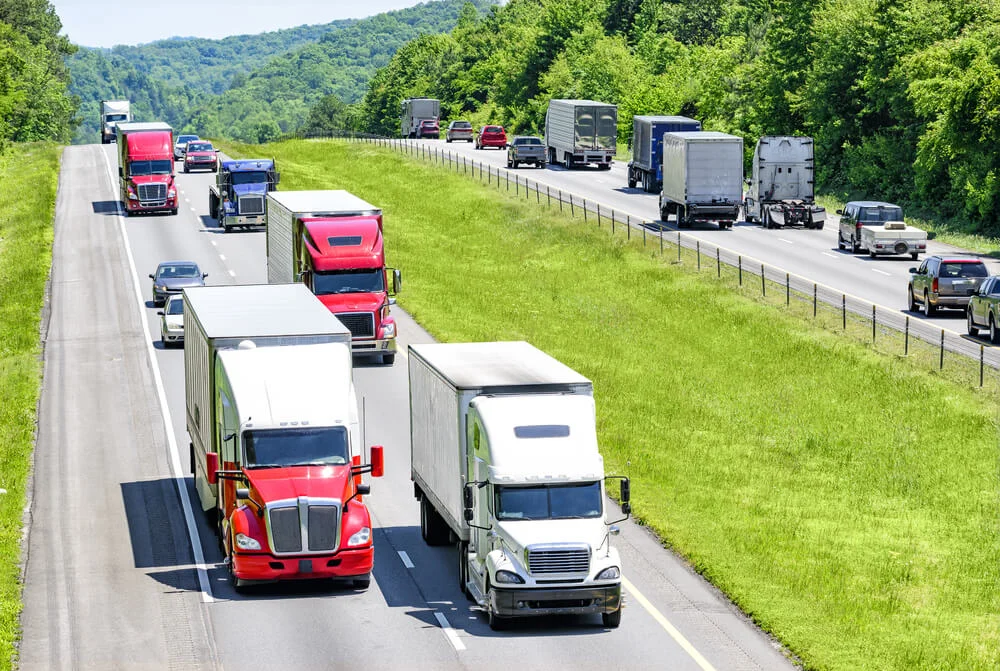
The left lane is for passing. For truckers, the middle lane is our left lane. Due to a ridiculous and outdated road system that will cut us off from using the 2 left lanes on a 4 lane highway, or the 3 left lanes on a 5+ lane interstate, you will notice the battle between these lanes in your first few days of driving a rig. Use your defensive driving skills with full intention to keep traffic flowing. Yes, you will have to be on constant alert for merging traffic entering the interstate, and yes, you will come up on a slower truck eventually - but there is nothing worse than being hung to dry out in the wrong lane when you're attempting to pass impeding traffic. If you block the left lanes, you are causing a much greater slow down behind you while contributing to unnecessary brake checks. The left lane is for passing, so get back over.
Road Rules
“Sincerely, The Trucking Community”
Let this be the direct line of communication from the trucking industry to the two wheelers and the “four wheelers.” Professional truck drivers have learned to respect the roads, and all of the travelers, road trippers, and commuters sharing it with us. Though the only point becoming a lesson to us, is the influx of avoidable accidents we see on a daily basis. These simple tips and motivation on your part to practice these tips, will show you how to become a better driver and allow truckers to more easily share the road with you.
We have compiled a list of “Trucker Road Rules” for driving around rigs and big trucks alike.
▪︎ First and formost, stay off your phone. It’s sad to have to say, but it’s become a game of frogger to swerve around all the texters drifting into our lanes. Pay attention while you’re behind the wheel and wait to find a safe place to use your phone.

▪︎ Let the truck merge. If you are coming up on a big truck with his left blinker on yet you decide to accelerate to get past him - you are slowing the driver even more which will in turn, lead to a much longer slow down. If a driver turns their signal on, trust that it’s for a good reason and our prompt timing can be crucial for everyone on the road. Allowing the truck to merge will keep traffic flowing smoother and safer. So keep in mind, the next time you come up to slow truck trying to regain speed, know it was likely caused by the individual who decided not to allow that truck to merge due to their own ignorance and disregard.
▪︎ When merging onto a large interstate or highway, freeway traffic has the right of way. As soon as you turn onto the on ramp, you should be getting to highway speed and checking your mirror for vehicles traveling in the right lane. This will allow for a smooth and safe merge. If there is a large truck in the right lane, respect it, because if you try to argue with the rig, you will not win.

It takes the length of a football field to stop a big truck safely.
▪︎ When driving next to a big truck, be mindful and do not sit in our blind spots. (Next to the doors of the cab and along side the trailer) We are not racing so please pass and keep it moving.

▪︎ Heed the golden rule - “If you can’t see my mirrors, I can’t see you.” This mean when passing a large truck from behind, please pass to the left as it will give the driver a quicker line of sight of your vehicle. The blind spot is much larger on the passenger side of trucks. If you pay attention, more than likely we are trying to get back into the right lane, and you’re simply slowing us down from getting over and “out of the way.”
▪︎ When passing a large truck, you should wait until you can see the entire front of the cab in your rearview mirrors, from the pavement to the roof of the truck. This is a good rule of thumb for leaving safe space in front of a rig for everyone’s safety.

Simple gauge for a safe distance when merging in front of a big truck.
▪︎ The same goes for riding behind a big truck. If you are riding too close behind a truck or, “knocking on our doors”, it’s going to be impossible for you to see what is happening in front of the truck. Therefore if an unexpected situation leads to an emergency stop, you won’t know where to turn to avoid the issue or have enough time to react, and it will be too late.

Victim of Texting while Driving
▪︎ When traveling in a mountainous area, it’s key that you understand what is going on with that big truck. When traveling on an incline, trucks lose speed and will likely be traveling well under the speed limit. Those losing speed or traveling under the speed limit, will turn on their flashers to alert others. Be cautious for these slow moving trucks. Please stay to the left and pass promptly.

▪︎ This is opposite for the downgrade, trucks will start to gain speed due to the weight they’re carrying and will need to keep it slow, as to not lose control or lose their brakes. You will notice lines of trucks continually braking going down the grade. So the same rule applies, stay to the left and pass promptly.
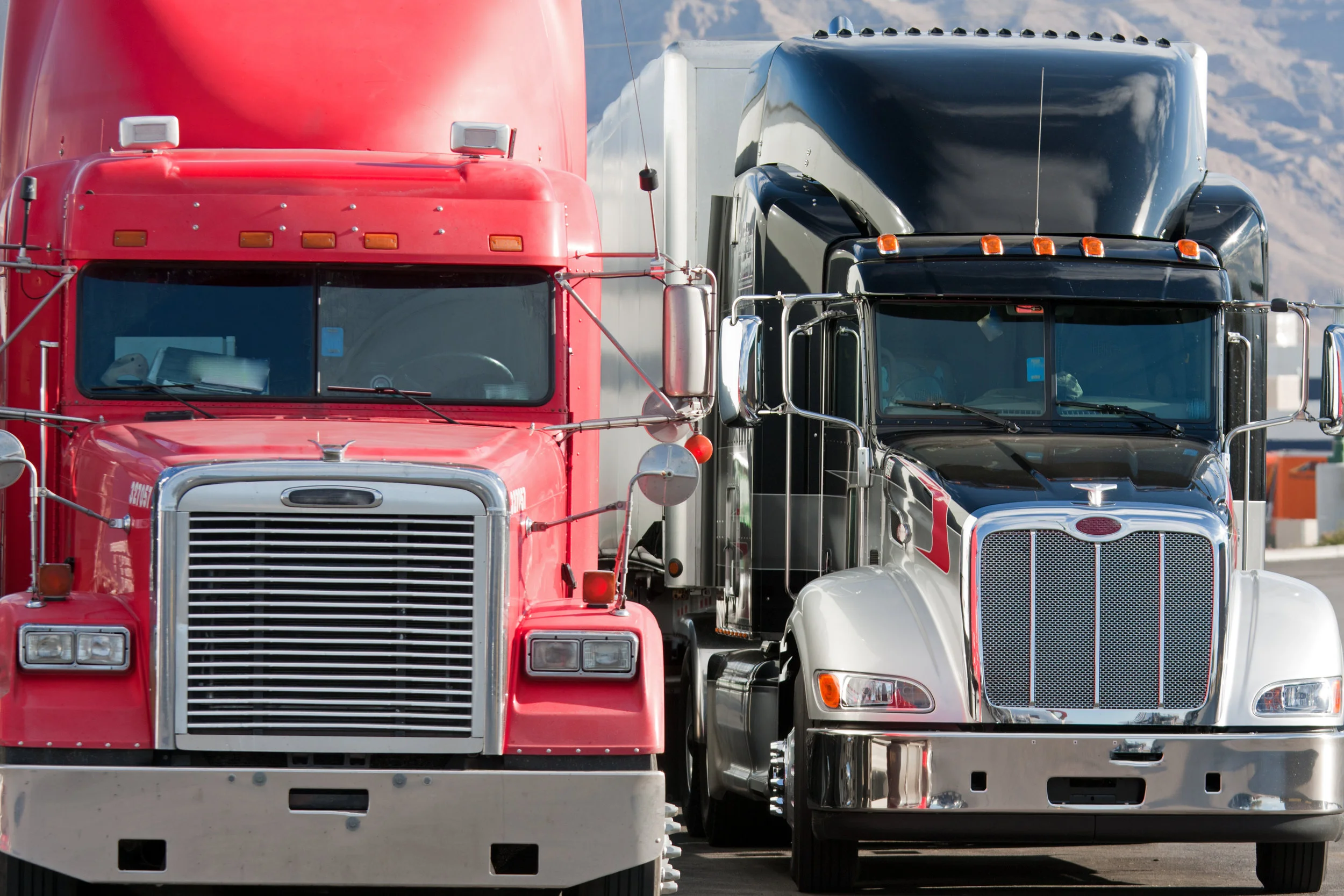
Truckers all across the states use the same language when traveling down the highways and it’s all in the lights…
• Consistent braking combined with four-way flashers mean traffic is slowing rapidly or coming to a complete stop.
• Flashing high beams is a simple signal for clearing you to get over safely or, the more commonly known, request for you to merge to the right so we pass safely.
• Quick use of the four way flashers can also be a way to say thank you for letting us over.
• Flashers (while traveling normally) can also communicate that there is a hazard up ahead or on the immediate shoulder. You might notice the truck inching closer to the dotted lines or split the lane, to allow more space from the shoulder. Allow the truck space for the hazard to not be made worse.
Bottom Line
Paying attention to big trucks over the road can deter you from danger or even save you from a traffic ticket. Watching truck traffic can tell you a lot about your surroundings and current road conditions. For example, if you notice multiple trucks getting over from the right lane, it’s likely that there is a hazard up ahead, either in the right lane or off the shoulder. You’ll quickly find out that’s not a lane that you want to be in. You can also easily avoid a ticket; when you notice a convoy or large group of trucks going slow, there’s a good chance of a smokey up ahead. With that in mind, remember that not only is our line of sight better and our driving skills more refined but statistics prove we are more likely to survive a crash. Don't end up on the other end of that statistic and learn to share the road with the ones who watch over you. At the end of the day we want to get home to our families, as much as we want you to, too.
Sincerely, The Trucking Community
“Drive like your family is in front you, and the state trooper is behind you.”